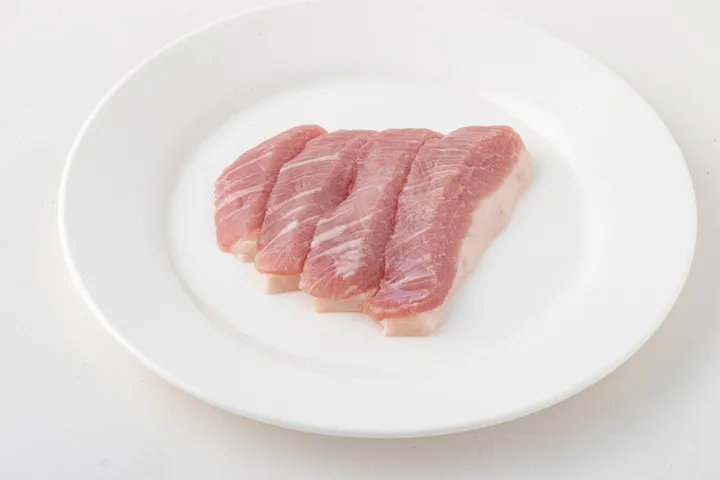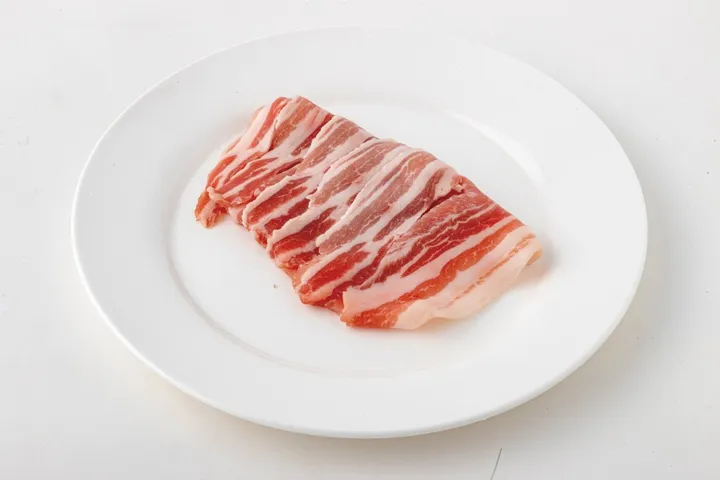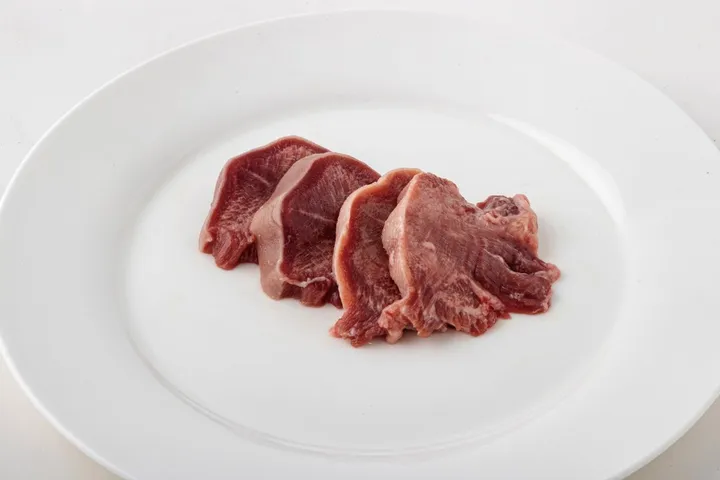
01它是什么,来自哪里?どんな部位?どこから来る?
用日语读一读 · 日本語で読む
舌(根元のタン元から先端のタン先まで)
The tongue, from the root (tan-moto) to the tip (tan-saki)
中国語・英語の解説を見る
舌头(从舌根“タン元”到舌尖“タン先”)
The tongue, from the root (tan-moto) to the tip (tan-saki)
02名字背后,还有这些故事。名前の由来とストーリー。
舌皮不适合食用,要剥掉再用。舌根部分脂肪多、较软,整体口感脆韧,常切薄片网烤或做成炸物。维生素A、B2、铁和牛磺酸的含量比正肉高。日本食品标准成分表中,生猪舌每100克含脂质16.3克,约为牛舌(31.8克)的一半。
皮は食用に向かないため取り除いて使う。根元のほうは脂肪が多く柔らかく、全体にコリコリとした歯ごたえがあり、薄切りにして網焼きやから揚げにする。ビタミンA・B2、鉄、タウリンを正肉より多く含む。日本食品標準成分表では生100gあたりの脂質が16.3gで、牛タン(31.8g)のほぼ半分。
再挑战一下日语原文 · 日本語で読む
皮は食用に向かないため取り除いて使う。根元のほうは脂肪が多く柔らかく、全体にコリコリとした歯ごたえがあり、薄切りにして網焼きやから揚げにする。ビタミンA・B2、鉄、タウリンを正肉より多く含む。日本食品標準成分表では生100gあたりの脂質が16.3gで、牛タン(31.8g)のほぼ半分。
The skin is inedible and is removed before use. The root end is fattier and softer, the whole tongue has a crunchy, springy bite, and it is sliced thin for grilling or deep-frying. It contains more vitamins A and B2, iron and taurine than muscle meat. Raw, it has 16.3 g of fat per 100 g—about half the 31.8 g in beef tongue.
中国語・英語の原文を見る
舌皮不适合食用,要剥掉再用。舌根部分脂肪多、较软,整体口感脆韧,常切薄片网烤或做成炸物。维生素A、B2、铁和牛磺酸的含量比正肉高。日本食品标准成分表中,生猪舌每100克含脂质16.3克,约为牛舌(31.8克)的一半。
The skin is inedible and is removed before use. The root end is fattier and softer, the whole tongue has a crunchy, springy bite, and it is sliced thin for grilling or deep-frying. It contains more vitamins A and B2, iron and taurine than muscle meat. Raw, it has 16.3 g of fat per 100 g—about half the 31.8 g in beef tongue.
03到了店里,它叫什么?お店ではどう呼ばれる?
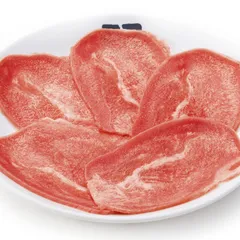
とんタン塩
「とん」指猪,即盐味猪舌;官方注明经过整形加工「とん」は豚。豚タンの塩味で、形を整える加工をしている(公式表記)
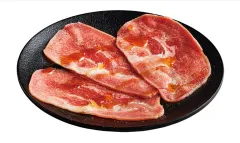
きんぐ塩タン【ポーク】
标【ポーク】即猪舌;官方注明经过嫩化和整形加工【ポーク】=豚のタン。やわらか加工・形を整える加工あり(公式表記)
展示各店菜单中的叫法与示例。菜品、做法和供应情况可能调整,以门店当日菜单为准。店铺菜品图片来源见完整词典的图片出处。各チェーン店でのメニュー表記例です。季節や店舗により変更となる場合があります。画像出典は菜单词典をご覧ください。