01它是什么,来自哪里?どんな部位?どこから来る?
用日语读一读 · 日本語で読む
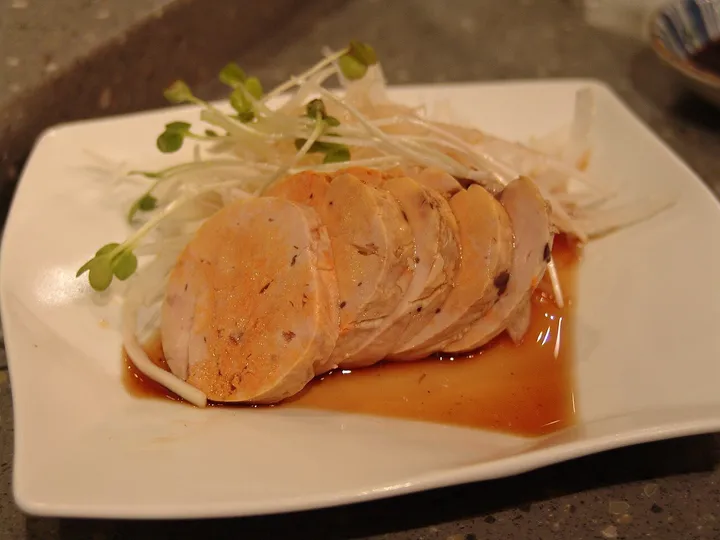
アンコウ類の肝臓。塩をして簀で巻いて蒸し、冷やしてから切って、ポン酢やわさび醤油で食べる
The liver of the monkfish, salted, rolled in a bamboo mat, steamed and chilled, then sliced and eaten with ponzu or wasabi soy sauce
中国語・英語の解説を見る
鮟鱇鱼的肝脏;抹盐后用竹帘卷起蒸熟,冷却后切片,蘸橙醋酱油或山葵酱油吃
The liver of the monkfish, salted, rolled in a bamboo mat, steamed and chilled, then sliced and eaten with ponzu or wasabi soy sauce
02名字背后,还有这些故事。名前の由来とストーリー。
鮟鱇肝每100克含脂质41.9克,约是鱼肉(0.2克)的200倍,因此又被称为“海里的鹅肝”。鮟鱇鱼肉软、很难在砧板上处理,所以用钩子挂住鱼嘴吊起来分切,称为“吊るし切り”;肝、皮、水袋(胃)、ヌノ(卵巢)、鳃、トモ(鳍)、柳肉(鱼身)等合称“七つ道具”(七件宝,具体算法说法不一)。旬期在冬季,俗话说“鮟鱇吃到梅花开”;江户时代的《本朝食鉴》也写道肝特别美味。
2017年鮟鱇卸货量全国第一的是下关港(720吨),茨城县等常磐近海也是著名的冬季产地。
肝の脂質は100gあたり41.9gと身(0.2g)の約200倍で、「海のフォアグラ」とも呼ばれる。アンコウは身が柔らかくまな板ではさばきにくいため、口に鉤をかけて吊るして切り分ける「吊るし切り」が行われ、肝・皮・水袋(胃)・ヌノ(卵巣)・エラ・トモ(ひれ)・柳肉(身)などを「七つ道具」と呼ぶ(数え方には諸説ある)。旬は冬で「アンコウは梅が咲くまで」といわれ、江戸時代の『本朝食鑑』も肝が特にうまいと記している。
2017年の水揚げ量日本一は下関港の720トンで、茨城県など常磐沖も冬の産地として知られる。
再挑战一下日语原文 · 日本語で読む
肝の脂質は100gあたり41.9gと身(0.2g)の約200倍で、「海のフォアグラ」とも呼ばれる。アンコウは身が柔らかくまな板ではさばきにくいため、口に鉤をかけて吊るして切り分ける「吊るし切り」が行われ、肝・皮・水袋(胃)・ヌノ(卵巣)・エラ・トモ(ひれ)・柳肉(身)などを「七つ道具」と呼ぶ(数え方には諸説ある)。旬は冬で「アンコウは梅が咲くまで」といわれ、江戸時代の『本朝食鑑』も肝が特にうまいと記している。2017年の水揚げ量日本一は下関港の720トンで、茨城県など常磐沖も冬の産地として知られる。
The liver holds 41.9 g of fat per 100 g, about 200 times the flesh (0.2 g), which earns it the name “foie gras of the sea”. Because the soft fish is hard to handle on a board, it is hung from a hook through the mouth and cut down piece by piece (tsurushi-giri), and liver, skin, stomach, ovary (nuno), gills, fins (tomo) and flesh (yanagi-niku) are called its “seven tools” — the list varies by source. It is best in winter (“monkfish until the plum blossoms”), and the Edo-period Honchō Shokkan already singled out the liver as especially good. Shimonoseki port landed the most monkfish in 2017, 720 t, and Ibaraki and the rest of the Jōban coast are known winter sources.
中国語・英語の原文を見る
鮟鱇肝每100克含脂质41.9克,约是鱼肉(0.2克)的200倍,因此又被称为“海里的鹅肝”。鮟鱇鱼肉软、很难在砧板上处理,所以用钩子挂住鱼嘴吊起来分切,称为“吊るし切り”;肝、皮、水袋(胃)、ヌノ(卵巢)、鳃、トモ(鳍)、柳肉(鱼身)等合称“七つ道具”(七件宝,具体算法说法不一)。旬期在冬季,俗话说“鮟鱇吃到梅花开”;江户时代的《本朝食鉴》也写道肝特别美味。2017年鮟鱇卸货量全国第一的是下关港(720吨),茨城县等常磐近海也是著名的冬季产地。
The liver holds 41.9 g of fat per 100 g, about 200 times the flesh (0.2 g), which earns it the name “foie gras of the sea”. Because the soft fish is hard to handle on a board, it is hung from a hook through the mouth and cut down piece by piece (tsurushi-giri), and liver, skin, stomach, ovary (nuno), gills, fins (tomo) and flesh (yanagi-niku) are called its “seven tools” — the list varies by source. It is best in winter (“monkfish until the plum blossoms”), and the Edo-period Honchō Shokkan already singled out the liver as especially good. Shimonoseki port landed the most monkfish in 2017, 720 t, and Ibaraki and the rest of the Jōban coast are known winter sources.
03到了店里,它叫什么?お店ではどう呼ばれる?
展示各店菜单中的叫法与示例。菜品、做法和供应情况可能调整,以门店当日菜单为准。店铺菜品图片来源见完整词典的图片出处。各チェーン店でのメニュー表記例です。季節や店舗により変更となる場合があります。画像出典は菜单词典をご覧ください。