01它是什么,来自哪里?どんな部位?どこから来る?
用日语读一读 · 日本語で読む
えらの下の、胸びれが付いている部分
The section below the gills where the pectoral fin is attached
中国語・英語の解説を見る
鱼鳃下方、长着胸鳍的部位
The section below the gills where the pectoral fin is attached
02名字背后,还有这些故事。名前の由来とストーリー。
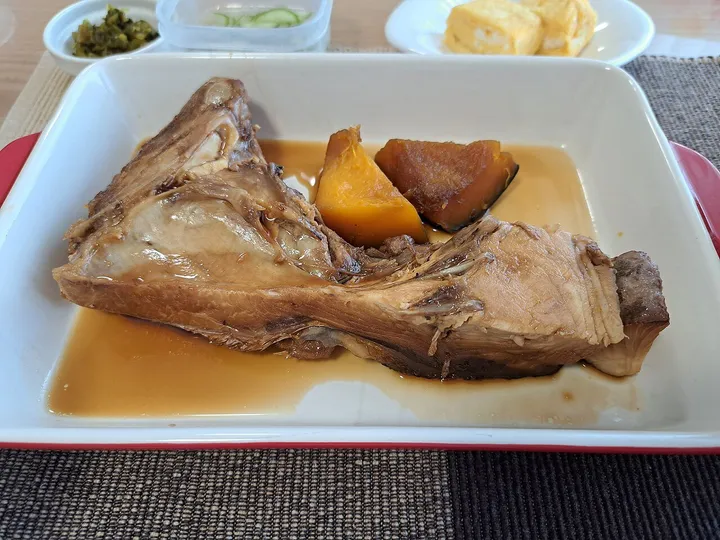
名字来自它的形状像割草用的“鎌”(镰刀)。真鲷的カマ脂肪丰富、味道浓郁,适合盐烤或照烧;金枪鱼的カマ则做盐烤或炖煮。金枪鱼的大腹(腹カミ)就是紧挨カマ的腹侧部分;头部除了カマ还能切出“カマトロ”“脳天”(头顶肉)“颊肉”等,这些过去的边角料如今都作为稀少部位流通。
名は、形が草刈りの「鎌」に似ていることによる。マダイのカマは脂がのって濃厚で塩焼きや照り焼きに向き、マグロのカマは塩焼きか煮付けにする。マグロの大トロ(腹カミ)はカマに接する腹側の部分で、頭部からはカマのほか「カマトロ」「脳天」「ホホ肉」なども切り出され、かつての端材が今は希少部位として流通している。
再挑战一下日语原文 · 日本語で読む
名は、形が草刈りの「鎌」に似ていることによる。マダイのカマは脂がのって濃厚で塩焼きや照り焼きに向き、マグロのカマは塩焼きか煮付けにする。マグロの大トロ(腹カミ)はカマに接する腹側の部分で、頭部からはカマのほか「カマトロ」「脳天」「ホホ肉」なども切り出され、かつての端材が今は希少部位として流通している。
The name comes from its likeness to a kama, a sickle. Sea-bream collar is rich and fatty and suits salt-grilling or teriyaki, while tuna collar is salt-grilled or simmered. Tuna ōtoro (hara-kami) is the belly section adjoining the collar, and the head also yields kama-toro, nōten and cheek meat — former trimmings now sold as rare cuts.
中国語・英語の原文を見る
名字来自它的形状像割草用的“鎌”(镰刀)。真鲷的カマ脂肪丰富、味道浓郁,适合盐烤或照烧;金枪鱼的カマ则做盐烤或炖煮。金枪鱼的大腹(腹カミ)就是紧挨カマ的腹侧部分;头部除了カマ还能切出“カマトロ”“脳天”(头顶肉)“颊肉”等,这些过去的边角料如今都作为稀少部位流通。
The name comes from its likeness to a kama, a sickle. Sea-bream collar is rich and fatty and suits salt-grilling or teriyaki, while tuna collar is salt-grilled or simmered. Tuna ōtoro (hara-kami) is the belly section adjoining the collar, and the head also yields kama-toro, nōten and cheek meat — former trimmings now sold as rare cuts.