01它是什么,来自哪里?どんな部位?どこから来る?
用日语读一读 · 日本語で読む
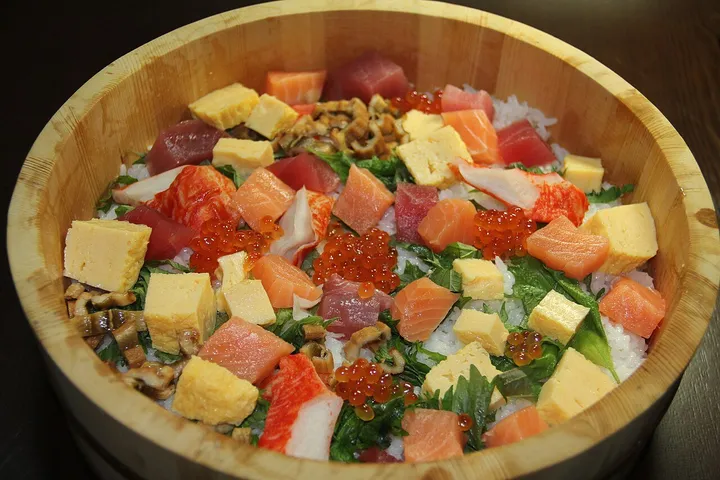
器に盛ったすし飯の上に具を散らしたすし。関西では具をすし飯に混ぜ込む
Sushi rice in a bowl or box with toppings scattered over it (in Kansai, mixed through it)
中国語・英語の解説を見る
在盛入容器的醋饭上铺撒各种料的寿司;关西多把料拌进饭里
Sushi rice in a bowl or box with toppings scattered over it (in Kansai, mixed through it)
02名字背后,还有这些故事。名前の由来とストーリー。
关东寿司店的散寿司,是在醋饭上摆放生鱼片、煮虾、玉子烧等握寿司的料。关西则把切碎的料拌进醋饭,再铺上蛋丝,叫“ばらずし”“五目ずし”“かやくずし”。冈山的“ばらずし(祭寿司)”流传着这样的故事:藩主颁布节俭令,命令百姓只准“一汤一菜”,百姓便把鱼和菜拌进饭里,这样就不算菜了。散寿司也是女儿节的固定菜色。
関東のすし屋のちらしは、すし飯の上に刺身・ゆでたエビ・玉子焼きなど握りのネタを並べたもの。関西では刻んだ具をすし飯に混ぜ、錦糸玉子をのせて「ばらずし」「五目ずし」「かやくずし」と呼ぶ。岡山の「ばらずし(まつりずし)」には、藩主が倹約令で庶民に「一汁一菜」を命じた際、具を飯に混ぜればおかずにならないと考えて作ったという話が伝わる。
ひなまつりの定番料理でもある。
再挑战一下日语原文 · 日本語で読む
関東のすし屋のちらしは、すし飯の上に刺身・ゆでたエビ・玉子焼きなど握りのネタを並べたもの。関西では刻んだ具をすし飯に混ぜ、錦糸玉子をのせて「ばらずし」「五目ずし」「かやくずし」と呼ぶ。岡山の「ばらずし(まつりずし)」には、藩主が倹約令で庶民に「一汁一菜」を命じた際、具を飯に混ぜればおかずにならないと考えて作ったという話が伝わる。ひなまつりの定番料理でもある。
At a Kantō sushi bar, chirashi is sushi rice laid with nigiri toppings: sashimi, boiled prawns, tamagoyaki. In Kansai chopped ingredients are mixed into the rice and topped with shredded omelette, and the dish is called barazushi, gomokuzushi or kayakuzushi. Okayama’s barazushi (matsurizushi) carries a story that when the domain lord’s frugality edict allowed commoners only “one soup, one side dish”, people mixed fish and vegetables into the rice so they would not count as a side dish. It is also a standard dish for Hinamatsuri, the Girls’ Festival.
中国語・英語の原文を見る
关东寿司店的散寿司,是在醋饭上摆放生鱼片、煮虾、玉子烧等握寿司的料。关西则把切碎的料拌进醋饭,再铺上蛋丝,叫“ばらずし”“五目ずし”“かやくずし”。冈山的“ばらずし(祭寿司)”流传着这样的故事:藩主颁布节俭令,命令百姓只准“一汤一菜”,百姓便把鱼和菜拌进饭里,这样就不算菜了。散寿司也是女儿节的固定菜色。
At a Kantō sushi bar, chirashi is sushi rice laid with nigiri toppings: sashimi, boiled prawns, tamagoyaki. In Kansai chopped ingredients are mixed into the rice and topped with shredded omelette, and the dish is called barazushi, gomokuzushi or kayakuzushi. Okayama’s barazushi (matsurizushi) carries a story that when the domain lord’s frugality edict allowed commoners only “one soup, one side dish”, people mixed fish and vegetables into the rice so they would not count as a side dish. It is also a standard dish for Hinamatsuri, the Girls’ Festival.