01它是什么,来自哪里?どんな部位?どこから来る?
用日语读一读 · 日本語で読む
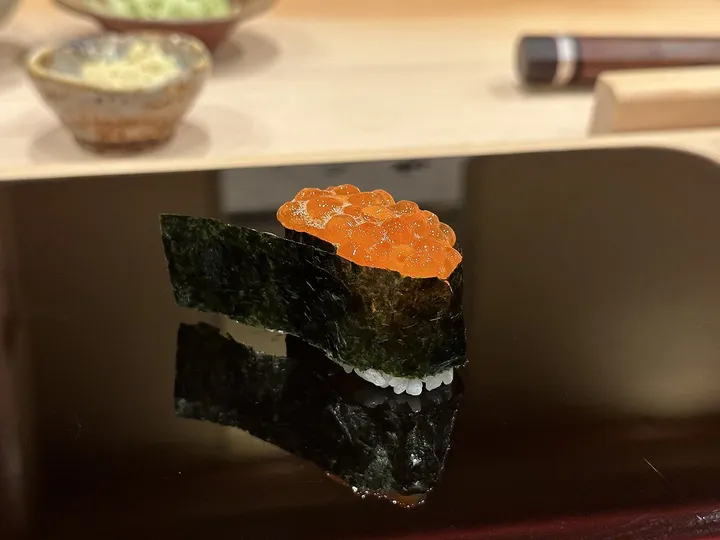
握ったシャリの側面に幅広の海苔を巻き、上にウニ・イクラなど崩れやすいネタをのせたすし
A block of rice wrapped round with a wide strip of nori, forming a cup for loose toppings such as sea urchin or salmon roe
中国語・英語の解説を見る
捏好的醋饭外侧围一圈较宽的海苔,上面放海胆、鲑鱼子等容易散开的料
A block of rice wrapped round with a wide strip of nori, forming a cup for loose toppings such as sea urchin or salmon roe
02名字背后,还有这些故事。名前の由来とストーリー。
因从侧面看形似军舰而得名,也简称“军舰”。银座久兵卫称,其初代店主在1940年代想出了海胆军舰卷,这种做法能让不便捏的软料也做成寿司,后来普及开来。回转寿司菜单上写作“まぐろたたき軍艦”“かにみそ軍艦”(はま寿司)、“かずのこ軍艦”(鲱鱼籽军舰,くら寿司)等“~军舰”,くら寿司的分类名则用平假名写作“ぐんかん”。
横から見た形が軍艦に似ていることからの名で、単に「軍艦」とも言う。銀座久兵衛は、初代店主が1940年代にウニの軍艦巻きを考案したとしており、握りにはのせにくい柔らかいネタを出せる方法として広まった。回転寿司の品書きでは「まぐろたたき軍艦」「かにみそ軍艦」(はま寿司)、「かずのこ軍艦」(くら寿司)のように「〜軍艦」と書かれ、くら寿司は分類名をひらがなで「ぐんかん」としている。
再挑战一下日语原文 · 日本語で読む
横から見た形が軍艦に似ていることからの名で、単に「軍艦」とも言う。銀座久兵衛は、初代店主が1940年代にウニの軍艦巻きを考案したとしており、握りにはのせにくい柔らかいネタを出せる方法として広まった。回転寿司の品書きでは「まぐろたたき軍艦」「かにみそ軍艦」(はま寿司)、「かずのこ軍艦」(くら寿司)のように「〜軍艦」と書かれ、くら寿司は分類名をひらがなで「ぐんかん」としている。
Named for its warship-like profile seen from the side, it is often called simply gunkan. Ginza Kyūbey says its founder devised the sea-urchin gunkan in the 1940s, a way of serving soft toppings that cannot be pressed onto rice, and the style spread from there. Conveyor-belt menus write it as “…軍艦”, e.g. まぐろたたき軍艦 or かにみそ軍艦 at Hama-zushi and かずのこ軍艦 (herring roe) at Kura Sushi, which heads the category in hiragana as ぐんかん.
中国語・英語の原文を見る
因从侧面看形似军舰而得名,也简称“军舰”。银座久兵卫称,其初代店主在1940年代想出了海胆军舰卷,这种做法能让不便捏的软料也做成寿司,后来普及开来。回转寿司菜单上写作“まぐろたたき軍艦”“かにみそ軍艦”(はま寿司)、“かずのこ軍艦”(鲱鱼籽军舰,くら寿司)等“~军舰”,くら寿司的分类名则用平假名写作“ぐんかん”。
Named for its warship-like profile seen from the side, it is often called simply gunkan. Ginza Kyūbey says its founder devised the sea-urchin gunkan in the 1940s, a way of serving soft toppings that cannot be pressed onto rice, and the style spread from there. Conveyor-belt menus write it as “…軍艦”, e.g. まぐろたたき軍艦 or かにみそ軍艦 at Hama-zushi and かずのこ軍艦 (herring roe) at Kura Sushi, which heads the category in hiragana as ぐんかん.
03到了店里,它叫什么?お店ではどう呼ばれる?
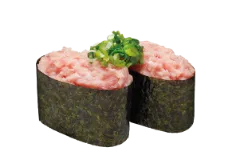
まぐろたたき軍艦
剁碎的金枪鱼加葱花的军舰卷,形式同葱花金枪鱼腩(ネギトロ);这里的「たたき」指剁碎,不是炙烤;官网中文名「金枪鱼泥军舰」たたいて細かくしたまぐろにねぎをのせた軍艦。ネギトロと同じ形。この「たたき」は炙りではなく刻むこと
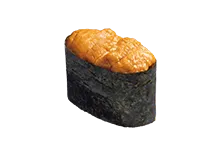
うに軍艦
智利产海胆军舰卷;仅北海道门店供应チリ産うにの軍艦。北海道の店舗限定
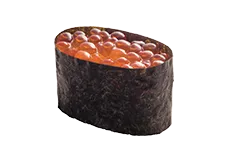
いくら
イクラ(鲑鳟鱼卵)军舰卷(美国、日本、俄罗斯产)いくらの軍艦(アメリカ・日本・ロシア産)
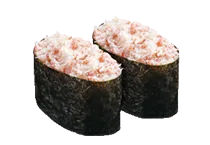
かに軍艦
雪蟹(本楚蟹)蟹肉军舰卷(原料产自俄罗斯、加拿大,在越南、中国加工)本ズワイガニの身の軍艦(原料はロシア・カナダ産、ベトナム・中国で加工)
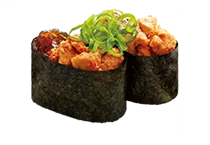
あんきも軍艦
鮟鱇鱼肝(あん肝)加葱花的军舰卷(期间限定)あん肝(アンコウの肝)にねぎをのせた軍艦(期間限定)
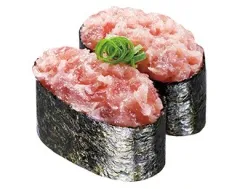
ねぎまぐろ軍艦
剁碎的黄鳍、大眼金枪鱼等配葱花的军舰卷,形式同葱花金枪鱼腩(ネギトロ)キハダ・メバチ等のまぐろをたたき、ねぎと合わせた軍艦。ネギトロと同じ形
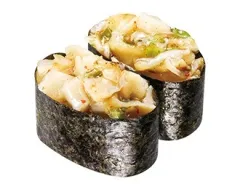
ほたてひもピリ辛わさび
用微辣芥末拌日本产扇贝「裙边」(外套膜)的军舰卷国産ホタテの「ひも」(外套膜)をピリ辛わさびで和えた軍艦
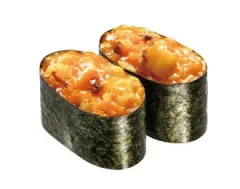
たこうに
用海胆拌日本产章鱼的「章鱼海胆」军舰卷国産のたこをうにで和えた「たこうに」の軍艦
展示各店菜单中的叫法与示例。菜品、做法和供应情况可能调整,以门店当日菜单为准。店铺菜品图片来源见完整词典的图片出处。各チェーン店でのメニュー表記例です。季節や店舗により変更となる場合があります。画像出典は菜单词典をご覧ください。