01它是什么,来自哪里?どんな部位?どこから来る?
用日语读一读 · 日本語で読む
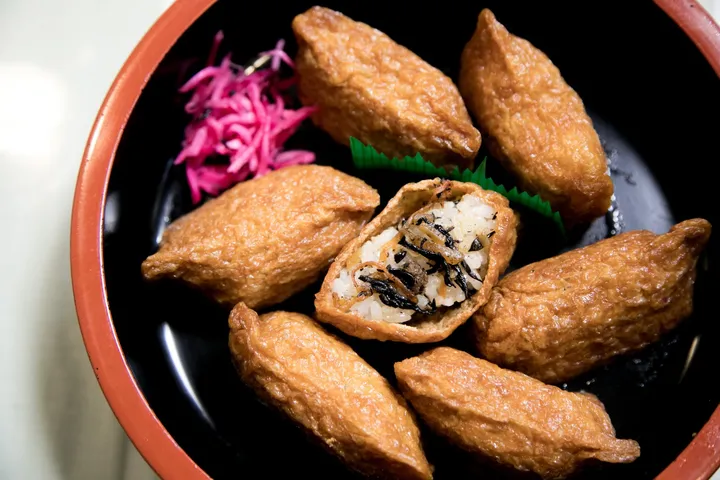
甘辛く煮た油揚げを袋状に開き、すし飯を詰めたもの
Sushi rice stuffed into a pouch of fried tofu simmered sweet and salty
中国語・英語の解説を見る
把甜咸口煮过的油炸豆腐皮撑成袋状,塞入醋饭
Sushi rice stuffed into a pouch of fried tofu simmered sweet and salty
02名字背后,还有这些故事。名前の由来とストーリー。
名字来自传说中稻荷神的使者狐狸爱吃油炸豆腐,也叫“信太寿司”“狐狸寿司”。据《守贞谩稿》,它起源于名古屋;江户从天保末年(1840年代初)起,有小贩点着画有鸟居的灯笼,夜里沿街叫卖。关东多用浓口酱油煮成长方形,关西多用薄油豆腐和淡口酱油做成三角形,西日本还常在饭里拌入什锦配料。稻荷寿司配卷寿司的拼盘叫“助六”,取歌舞伎《助六》中情人“扬卷”的谐音:“扬”指油豆腐,“卷”指卷寿司。
稲荷神の使いとされるキツネが油揚げを好むとされることからの名で、「しのだずし」「きつねずし」ともいう。『守貞謾稿』によれば発祥は名古屋で、江戸では天保(1830〜44)の末ごろから、鳥居を描いた行灯をともした稲荷ずし売りが夜の町を売り歩いた。関東は濃口醤油で煮た長方形、関西は薄揚げと淡口醤油を使った三角形が多く、西日本では五目の具を混ぜることも多い。
いなりと巻きずしの詰め合わせを「助六」と呼ぶのは、歌舞伎『助六』の恋人「揚巻」に「揚げ」と「巻き」を掛けたもの。
再挑战一下日语原文 · 日本語で読む
稲荷神の使いとされるキツネが油揚げを好むとされることからの名で、「しのだずし」「きつねずし」ともいう。『守貞謾稿』によれば発祥は名古屋で、江戸では天保(1830〜44)の末ごろから、鳥居を描いた行灯をともした稲荷ずし売りが夜の町を売り歩いた。関東は濃口醤油で煮た長方形、関西は薄揚げと淡口醤油を使った三角形が多く、西日本では五目の具を混ぜることも多い。いなりと巻きずしの詰め合わせを「助六」と呼ぶのは、歌舞伎『助六』の恋人「揚巻」に「揚げ」と「巻き」を掛けたもの。
The name comes from the belief that foxes, messengers of the Inari deity, love fried tofu; it is also called shinoda-zushi or kitsune-zushi. According to the Morisada Mankō it began in Nagoya, and in Edo from the end of the Tenpō era (early 1840s) vendors hawked it at night under lanterns painted with a torii gate. Kantō versions are oblong and simmered in dark soy sauce; Kansai ones are often triangular, made with thin fried tofu and light soy sauce, and western Japan often mixes vegetables into the rice. A box of inari and maki is called “Sukeroku” after the kabuki hero whose lover Agemaki’s name puns on age (fried tofu) and maki (roll).
中国語・英語の原文を見る
名字来自传说中稻荷神的使者狐狸爱吃油炸豆腐,也叫“信太寿司”“狐狸寿司”。据《守贞谩稿》,它起源于名古屋;江户从天保末年(1840年代初)起,有小贩点着画有鸟居的灯笼,夜里沿街叫卖。关东多用浓口酱油煮成长方形,关西多用薄油豆腐和淡口酱油做成三角形,西日本还常在饭里拌入什锦配料。稻荷寿司配卷寿司的拼盘叫“助六”,取歌舞伎《助六》中情人“扬卷”的谐音:“扬”指油豆腐,“卷”指卷寿司。
The name comes from the belief that foxes, messengers of the Inari deity, love fried tofu; it is also called shinoda-zushi or kitsune-zushi. According to the Morisada Mankō it began in Nagoya, and in Edo from the end of the Tenpō era (early 1840s) vendors hawked it at night under lanterns painted with a torii gate. Kantō versions are oblong and simmered in dark soy sauce; Kansai ones are often triangular, made with thin fried tofu and light soy sauce, and western Japan often mixes vegetables into the rice. A box of inari and maki is called “Sukeroku” after the kabuki hero whose lover Agemaki’s name puns on age (fried tofu) and maki (roll).
03到了店里,它叫什么?お店ではどう呼ばれる?
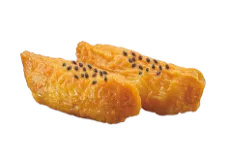
いなり(ごま入り)
油豆腐皮包醋饭的稻荷寿司,加白芝麻和黑芝麻;官网中文名「稻荷寿司(配芝麻)」油揚げに酢飯を詰めたいなり寿司。白ごま・黒ごま入り
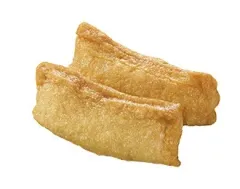
いなり
油豆腐皮包醋饭的稻荷寿司油揚げに酢飯を詰めたいなり寿司
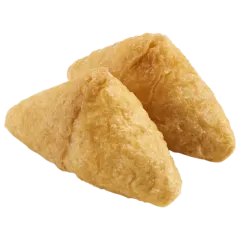
いなり
油豆腐皮包醋饭的稻荷寿司;官网中文名「腐皮寿司」油揚げに酢飯を詰めたいなり寿司
展示各店菜单中的叫法与示例。菜品、做法和供应情况可能调整,以门店当日菜单为准。店铺菜品图片来源见完整词典的图片出处。各チェーン店でのメニュー表記例です。季節や店舗により変更となる場合があります。画像出典は菜单词典をご覧ください。