01它是什么,来自哪里?どんな部位?どこから来る?
用日语读一读 · 日本語で読む
大きな部位をさらに細かく分けて取る小さな部位の総称(ミスジ、ザブトン、イチボなど)
Small sub-cuts taken from the major primals (misuji, zabuton, ichibo and so on)
中国語・英語の解説を見る
把大部位再细分后取出的小块部位的统称(如ミスジ、ザブトン、イチボ)
Small sub-cuts taken from the major primals (misuji, zabuton, ichibo and so on)
02名字背后,还有这些故事。名前の由来とストーリー。
没有明确定义:按「食肉小売品質基準」(肉类零售品质基准),牛肉分为11个部位,而烤肉店等会进一步细分,提供稀少部位(农林水产省)。据荏原食品(エバラ食品)介绍,一头牛约可取400公斤肉,其中只占0.5%、约2公斤左右的部位通常被称为稀少部位。这一说法始于部分烤肉店为提升附加值推出的菜品,随2000年代初的烤肉热普及,后来又细分出「カメノコ」(内侧腿肉的一部分)、「メガネ」(骨盆周围的瘦肉)等(同上)。
明確な定義はなく、牛肉の部位は「食肉小売品質基準」で11部位に分けられるが、焼肉店などではさらに細かく分けた希少部位が味わえる(農林水産省)。エバラ食品の解説によれば、牛1頭から取れる食肉約400kgのうち0.5%、約2kgほどしか取れない部位を指すことが多い。一部の焼肉店が付加価値をつけてメニューにしたのが始まりで、2000年代初頭の焼肉ブームで広まり、カメノコ(うちももの一部)やメガネ(骨盤まわりの赤身)など細分化が進んだという(同)。
再挑战一下日语原文 · 日本語で読む
明確な定義はなく、牛肉の部位は「食肉小売品質基準」で11部位に分けられるが、焼肉店などではさらに細かく分けた希少部位が味わえる(農林水産省)。エバラ食品の解説によれば、牛1頭から取れる食肉約400kgのうち0.5%、約2kgほどしか取れない部位を指すことが多い。一部の焼肉店が付加価値をつけてメニューにしたのが始まりで、2000年代初頭の焼肉ブームで広まり、カメノコ(うちももの一部)やメガネ(骨盤まわりの赤身)など細分化が進んだという(同)。
There is no formal definition: Japan’s retail meat standard divides beef into 11 parts, while yakiniku restaurants cut further into rare cuts (MAFF). Ebara Foods explains that the term usually means parts yielding only about 2 kg—0.5% of the roughly 400 kg of meat from one animal. It began as a value-adding menu device at some yakiniku shops, spread with the early-2000s yakiniku boom, and has since split into ever smaller cuts such as kamenoko (part of the inside round) and megane (lean meat around the pelvis) (same source).
中国語・英語の原文を見る
没有明确定义:按「食肉小売品質基準」(肉类零售品质基准),牛肉分为11个部位,而烤肉店等会进一步细分,提供稀少部位(农林水产省)。据荏原食品(エバラ食品)介绍,一头牛约可取400公斤肉,其中只占0.5%、约2公斤左右的部位通常被称为稀少部位。这一说法始于部分烤肉店为提升附加值推出的菜品,随2000年代初的烤肉热普及,后来又细分出「カメノコ」(内侧腿肉的一部分)、「メガネ」(骨盆周围的瘦肉)等(同上)。
There is no formal definition: Japan’s retail meat standard divides beef into 11 parts, while yakiniku restaurants cut further into rare cuts (MAFF). Ebara Foods explains that the term usually means parts yielding only about 2 kg—0.5% of the roughly 400 kg of meat from one animal. It began as a value-adding menu device at some yakiniku shops, spread with the early-2000s yakiniku boom, and has since split into ever smaller cuts such as kamenoko (part of the inside round) and megane (lean meat around the pelvis) (same source).
03到了店里,它叫什么?お店ではどう呼ばれる?
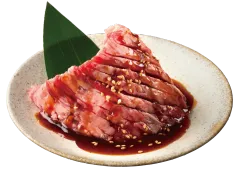
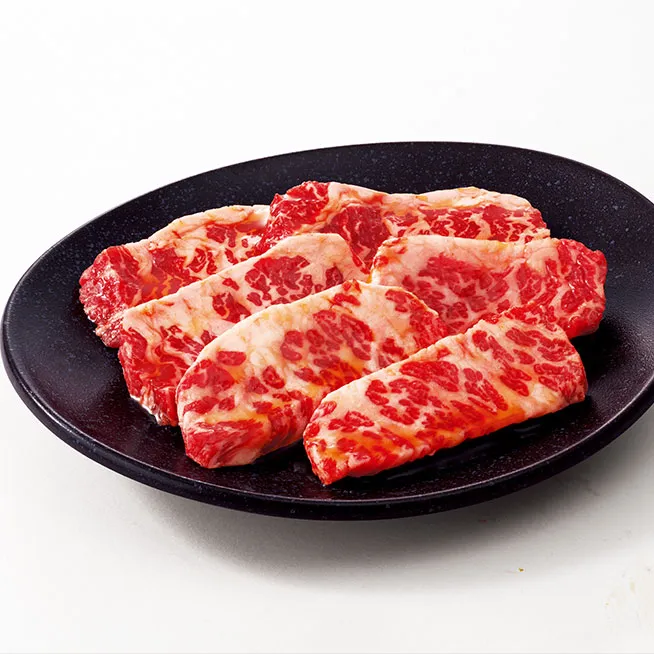
きんぐカルビ
每头牛只能取约500克的稀有部位,瘦肥约6:41頭から500gほどしか取れない希少部位。赤身と脂身は6:4
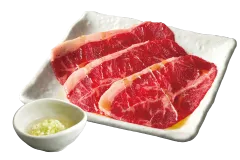
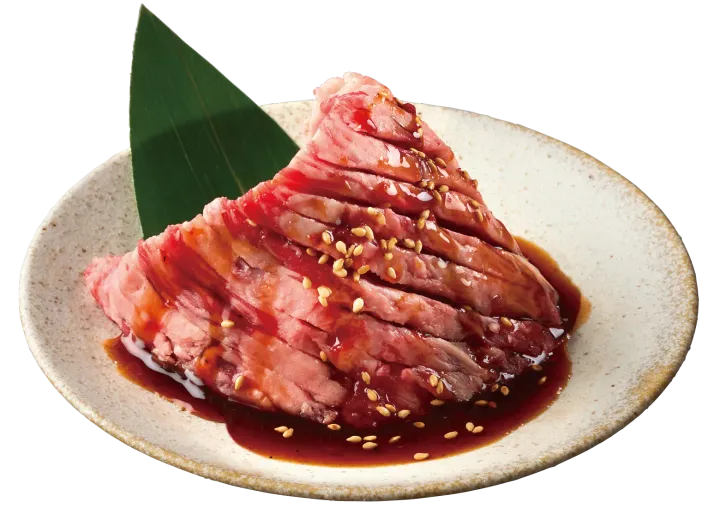
炙りミスジ ~ねぎ塩ポン酢~
炙烤稀有部位板腱,蘸葱盐柚子醋吃希少部位のミスジをあぶり、ねぎ塩ポン酢にくぐらせて食べる
展示各店菜单中的叫法与示例。菜品、做法和供应情况可能调整,以门店当日菜单为准。店铺菜品图片来源见完整词典的图片出处。各チェーン店でのメニュー表記例です。季節や店舗により変更となる場合があります。画像出典は菜单词典をご覧ください。