01它是什么,来自哪里?どんな部位?どこから来る?
用日语读一读 · 日本語で読む
数の後に付けて、何人分の量かを表す語。「1人前」「2人前」
Suffix after a number giving how many people’s portions: ichi-ninmae (one serving), ni-ninmae (two)
中国語・英語の解説を見る
接在数字后表示几人份的量,如「1人前」「2人前」
Suffix after a number giving how many people’s portions: ichi-ninmae (one serving), ni-ninmae (two)
02名字背后,还有这些故事。名前の由来とストーリー。
「一人前」(いちにんまえ)指分给一个人的量,1701年的浮世草子《倾城色三味线》中已有用例(《日本国语大辞典》)。同样的「一人前」还表示“成年”“技艺等达到一定水准”,如「一人前の医者」(独当一面的医生)。单独的「人前」读作“ひとまえ”,意思变成“人前、众人面前”。
「一人前(いちにんまえ)」は一人に割り当てる量をいい、1701年の浮世草子『傾城色三味線』に用例がある(日本国語大辞典)。同じ「一人前」は「成人であること」「技芸などが一応の水準に達していること」も表し、「一人前の医者」のように使う。「人前」だけだと「ひとまえ」と読み、「人の見ている前・公衆の面前」という別の意味になる。
再挑战一下日语原文 · 日本語で読む
「一人前(いちにんまえ)」は一人に割り当てる量をいい、1701年の浮世草子『傾城色三味線』に用例がある(日本国語大辞典)。同じ「一人前」は「成人であること」「技芸などが一応の水準に達していること」も表し、「一人前の医者」のように使う。「人前」だけだと「ひとまえ」と読み、「人の見ている前・公衆の面前」という別の意味になる。
Ichi-ninmae is the amount allotted to one person, attested in the 1701 ukiyo-zōshi Keisei Iro Jamisen (Nihon Kokugo Daijiten). The same ichi-ninmae also means “adult” or “fully qualified”, as in ichi-ninmae no isha, “a full-fledged doctor”. On its own, 人前 is read hitomae and means “in front of others, in public”.
中国語・英語の原文を見る
「一人前」(いちにんまえ)指分给一个人的量,1701年的浮世草子《倾城色三味线》中已有用例(《日本国语大辞典》)。同样的「一人前」还表示“成年”“技艺等达到一定水准”,如「一人前の医者」(独当一面的医生)。单独的「人前」读作“ひとまえ”,意思变成“人前、众人面前”。
Ichi-ninmae is the amount allotted to one person, attested in the 1701 ukiyo-zōshi Keisei Iro Jamisen (Nihon Kokugo Daijiten). The same ichi-ninmae also means “adult” or “fully qualified”, as in ichi-ninmae no isha, “a full-fledged doctor”. On its own, 人前 is read hitomae and means “in front of others, in public”.
03到了店里,它叫什么?お店ではどう呼ばれる?
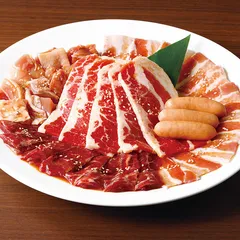
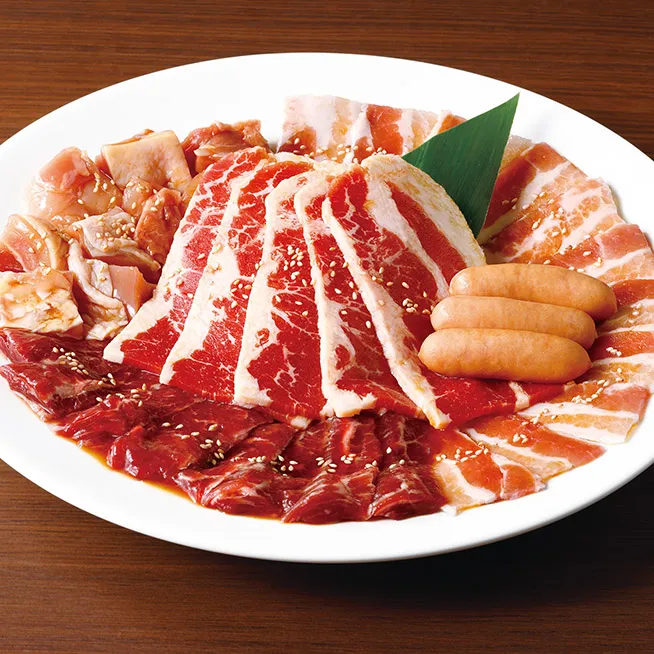
バラエティー四種盛り
精选牛五花、牛横膈膜、猪五花、鸡腿的大拼盘;普通份(2–3人份,约320克)和大份(3–4人份,约500克)厳選とろカルビ・牛ハラミ・豚カルビ・とりももの大皿。並(2〜3人前・約320g)と大(3〜4人前・約500g)
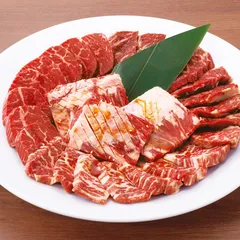
厳選牛角盛り
牛角上等五花、国王五花、厚切垂肉、牛角上等横膈膜的大拼盘;普通份(2–3人份)和大份(3–4人份)牛角上カルビ・王様カルビ・厚切りサガリ・牛角上ハラミの大皿。並(2〜3人前)と大(3〜4人前)
展示各店菜单中的叫法与示例。菜品、做法和供应情况可能调整,以门店当日菜单为准。店铺菜品图片来源见完整词典的图片出处。各チェーン店でのメニュー表記例です。季節や店舗により変更となる場合があります。画像出典は菜单词典をご覧ください。