01它是什么,来自哪里?どんな部位?どこから来る?
用日语读一读 · 日本語で読む
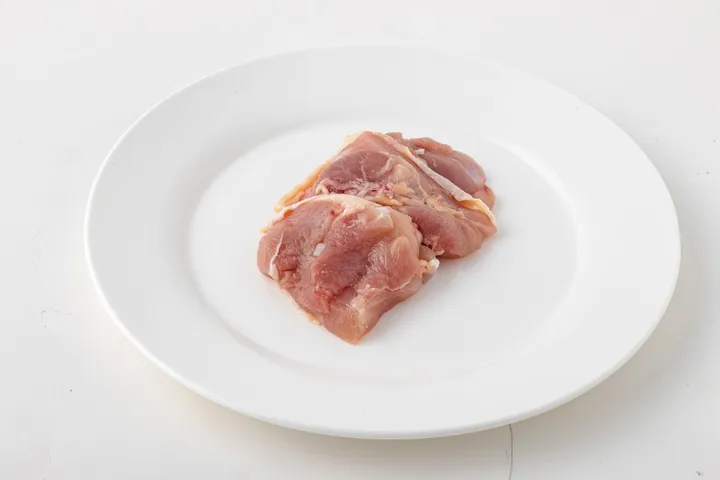
脚(腿)の肉。規格の「もも肉」は腿から骨を除いた皮つきの肉で、ひざ関節より上を「うわもも」(大腿)、下を「したもも」(下腿)という
Leg meat. In the standard, momo-niku is boneless, skin-on leg; above the knee joint is uwamomo (thigh proper), below it shitamomo (drumstick)
中国語・英語の解説を見る
鸡腿的肉。规格中的“腿肉”指去骨带皮的整条腿肉,膝关节以上叫“上腿”(うわもも,大腿),以下叫“下腿”(したもも,小腿)
Leg meat. In the standard, momo-niku is boneless, skin-on leg; above the knee joint is uwamomo (thigh proper), below it shitamomo (drumstick)
02名字背后,还有这些故事。名前の由来とストーリー。
肉色偏红、厚实,鲜味和醇厚感强。若鸡带皮生鸡腿肉每100克190千卡、脂肪14.2克、蛋白质16.6克,去皮后为113千卡、脂肪5.0克。烤鸡串店也把它叫作“正肉”(せいにく),而规格上的“正肉”指胸肉加腿肉;鸡肉大葱串(ねぎま)一般也用腿肉。腿根附近的一小块肉叫“ソリ”,源自法语sot-l'y-laisse(“傻瓜才会剩下”),这一叫法据说始于东京银座的烤鸡店“Bird Land”(バードランド)。
赤みを帯びた肉厚の肉で、うま味とコクが強い。若どりのもも(皮つき・生)は100gあたり190kcal・脂質14.2g・たんぱく質16.6g、皮を除くと113kcal・脂質5.0g。焼き鳥店では「正肉(せいにく)」とも呼び(規格の「正肉」はむね肉ともも肉を合わせたもの)、ねぎまにもふつうもも肉を使う。もも肉の付け根近くの小さな肉「ソリ」は仏語 sot-l'y-laisse(愚か者はそこを残す)に由来し、この呼び名は銀座「バードランド」が発祥とされる。
再挑战一下日语原文 · 日本語で読む
赤みを帯びた肉厚の肉で、うま味とコクが強い。若どりのもも(皮つき・生)は100gあたり190kcal・脂質14.2g・たんぱく質16.6g、皮を除くと113kcal・脂質5.0g。焼き鳥店では「正肉(せいにく)」とも呼び(規格の「正肉」はむね肉ともも肉を合わせたもの)、ねぎまにもふつうもも肉を使う。もも肉の付け根近くの小さな肉「ソリ」は仏語 sot-l'y-laisse(愚か者はそこを残す)に由来し、この呼び名は銀座「バードランド」が発祥とされる。
Reddish, thick meat with a rich, savoury flavour. Raw skin-on thigh from young chickens has 190 kcal, 14.2 g fat and 16.6 g protein per 100 g; skinless, 113 kcal and 5.0 g fat. Yakitori shops also call it seiniku (“proper meat”) – whereas in the standard 正肉 means breast and thigh together – and negima is normally made with thigh. The small morsel near the top of the thigh is called sori, from French sot-l'y-laisse (“only a fool leaves it”), a name said to have started at Bird Land in Ginza.
中国語・英語の原文を見る
肉色偏红、厚实,鲜味和醇厚感强。若鸡带皮生鸡腿肉每100克190千卡、脂肪14.2克、蛋白质16.6克,去皮后为113千卡、脂肪5.0克。烤鸡串店也把它叫作“正肉”(せいにく),而规格上的“正肉”指胸肉加腿肉;鸡肉大葱串(ねぎま)一般也用腿肉。腿根附近的一小块肉叫“ソリ”,源自法语sot-l'y-laisse(“傻瓜才会剩下”),这一叫法据说始于东京银座的烤鸡店“Bird Land”(バードランド)。
Reddish, thick meat with a rich, savoury flavour. Raw skin-on thigh from young chickens has 190 kcal, 14.2 g fat and 16.6 g protein per 100 g; skinless, 113 kcal and 5.0 g fat. Yakitori shops also call it seiniku (“proper meat”) – whereas in the standard 正肉 means breast and thigh together – and negima is normally made with thigh. The small morsel near the top of the thigh is called sori, from French sot-l'y-laisse (“only a fool leaves it”), a name said to have started at Bird Land in Ginza.
03到了店里,它叫什么?お店ではどう呼ばれる?
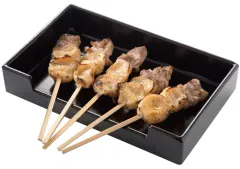
純けい
下过蛋的母鸡(老母鸡)的腿肉和皮,盐烤;可按喜好蘸日式黄芥末親鶏(卵を産んだメス鶏)のもも肉と皮の塩焼き。好みでからしを付ける
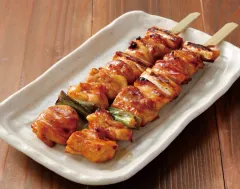
もも貴族焼
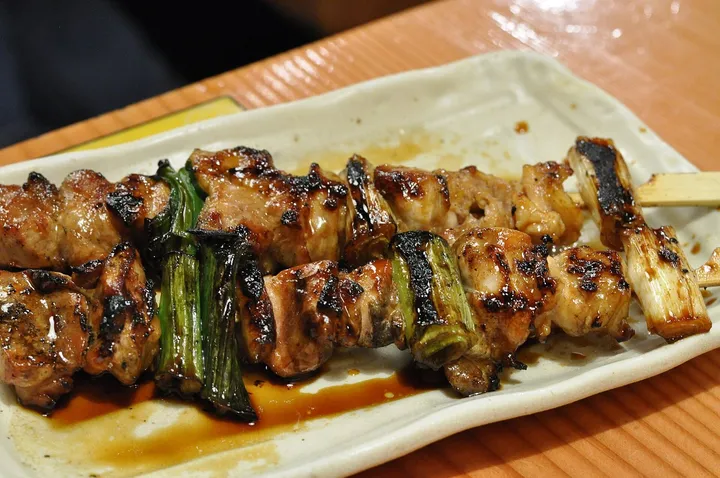
鸡腿肉与大葱交替串成的招牌串,可选酱汁、盐或香辣味もも肉とねぎを交互に刺した名物串。たれ・塩・スパイスから選べる
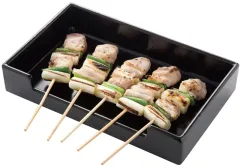
ねぎま
嫩鸡腿肉与大葱交替串成,刷酱汁烤若どりのもも肉とねぎを交互に刺したタレ焼き
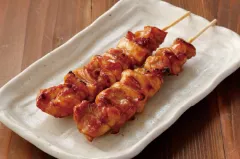
みたれ(もも肉)
只串鸡腿肉的酱汁烤串もも肉だけを刺したたれ焼き
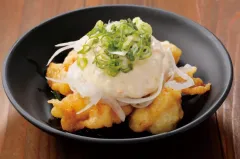
チキン南蛮
炸鸡腿肉浇塔塔酱揚げたもも肉にタルタルソースをかけた一品
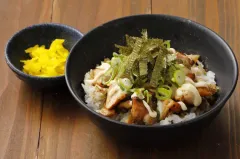
鶏旨丼(タレ)
酱汁烤鸡腿肉盖饭,撒鱼干粉、挤蛋黄酱タレで焼いたもも肉に、けずり粉とマヨネーズをかけた焼鳥丼
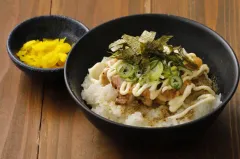
鶏旨丼(塩)
岩盐烤鸡腿肉盖饭,撒鱼干粉、挤蛋黄酱岩塩で焼いたもも肉に、けずり粉とマヨネーズをかけた焼鳥丼
展示各店菜单中的叫法与示例。菜品、做法和供应情况可能调整,以门店当日菜单为准。店铺菜品图片来源见完整词典的图片出处。各チェーン店でのメニュー表記例です。季節や店舗により変更となる場合があります。画像出典は菜单词典をご覧ください。