01它是什么,来自哪里?どんな部位?どこから来る?
用日语读一读 · 日本語で読む
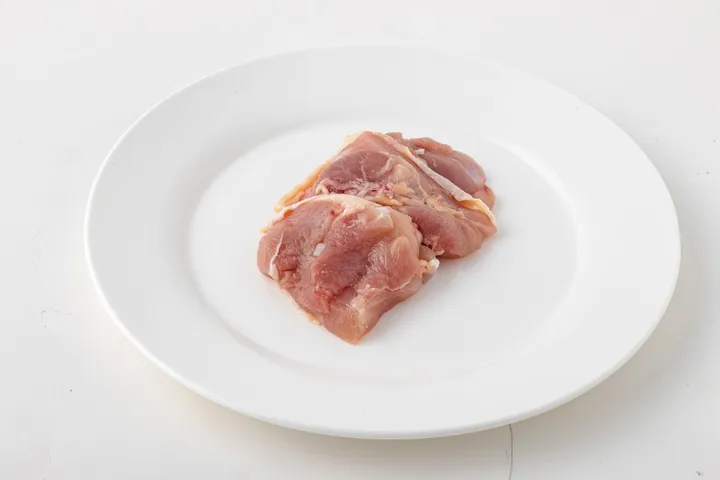
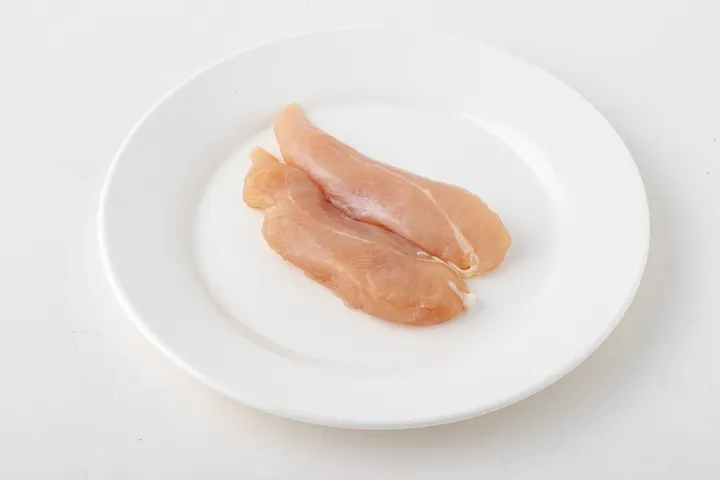
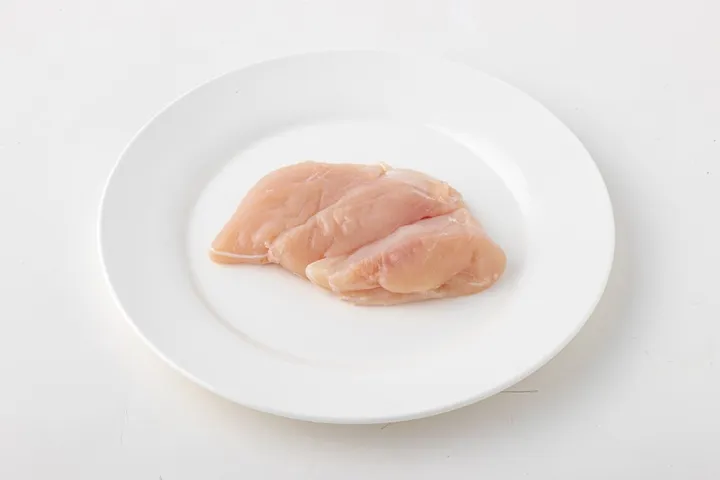
胸部の肉(骨を除いた皮つき肉)。規格では手羽と首の皮を除いた胸の肉で、手羽もとの付け根部分は「かたこにく」として分ける
Boneless, skin-on breast. The standard defines it as the breast minus the whole wing and neck skin, with the piece at the base of the wing classed separately as katakoniku
中国語・英語の解説を見る
胸部去骨带皮的肉。规格上指去掉整只翅膀和颈皮后的胸肉,翅根根部那块另称“かたこにく”(肩小肉)
Boneless, skin-on breast. The standard defines it as the breast minus the whole wing and neck skin, with the piece at the base of the wing classed separately as katakoniku
02名字背后,还有这些故事。名前の由来とストーリー。
脂肪少、味清淡:若鸡去皮生鸡胸每100克105千卡、脂肪1.9克、蛋白质23.3克,带皮为133千卡、脂肪5.9克。高温加热容易发柴。鸡胸肉富含咪唑二肽(imidazole dipeptide)。胸肉与翅根之间的“ふりそで”脂肪比腿肉少、又比胸肉多汁,超市里以“鸡肩肉”的名称出售。
脂肪が少なく淡白で、若どりのむね(皮なし・生)は100gあたり105kcal・脂質1.9g・たんぱく質23.3g、皮つきは133kcal・脂質5.9g。高温で加熱するとパサつきやすい。イミダゾールジペプチドを多く含む。むね肉と手羽もとの間にある「ふりそで」は、もも肉より脂が控えめでむね肉よりジューシーな部位で、スーパーでは「鶏肩肉」として売られる。
再挑战一下日语原文 · 日本語で読む
脂肪が少なく淡白で、若どりのむね(皮なし・生)は100gあたり105kcal・脂質1.9g・たんぱく質23.3g、皮つきは133kcal・脂質5.9g。高温で加熱するとパサつきやすい。イミダゾールジペプチドを多く含む。むね肉と手羽もとの間にある「ふりそで」は、もも肉より脂が控えめでむね肉よりジューシーな部位で、スーパーでは「鶏肩肉」として売られる。
Lean and mild: raw skinless breast from young chickens has 105 kcal, 1.9 g fat and 23.3 g protein per 100 g (skin-on: 133 kcal, 5.9 g fat). It dries out easily at high heat. Breast meat is rich in imidazole dipeptides. The furisode, between the breast and the wing drumette, is leaner than thigh but juicier than breast, and is sold in supermarkets as “chicken shoulder”.
中国語・英語の原文を見る
脂肪少、味清淡:若鸡去皮生鸡胸每100克105千卡、脂肪1.9克、蛋白质23.3克,带皮为133千卡、脂肪5.9克。高温加热容易发柴。鸡胸肉富含咪唑二肽(imidazole dipeptide)。胸肉与翅根之间的“ふりそで”脂肪比腿肉少、又比胸肉多汁,超市里以“鸡肩肉”的名称出售。
Lean and mild: raw skinless breast from young chickens has 105 kcal, 1.9 g fat and 23.3 g protein per 100 g (skin-on: 133 kcal, 5.9 g fat). It dries out easily at high heat. Breast meat is rich in imidazole dipeptides. The furisode, between the breast and the wing drumette, is leaner than thigh but juicier than breast, and is sold in supermarkets as “chicken shoulder”.
03到了店里,它叫什么?お店ではどう呼ばれる?
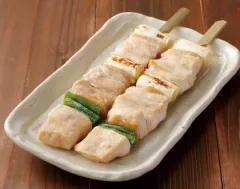
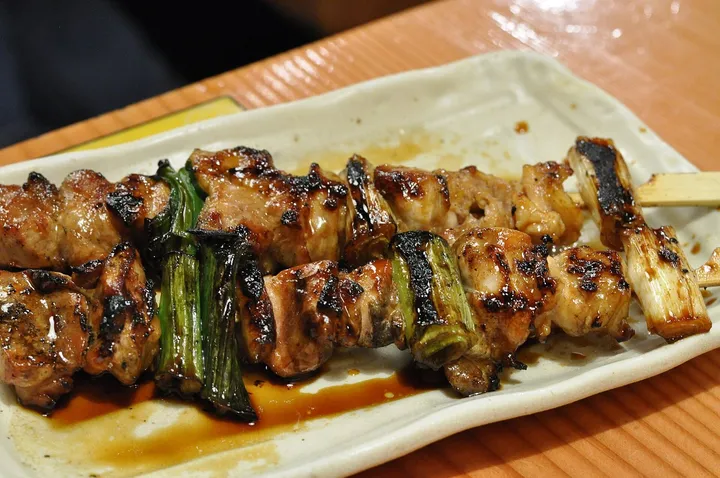
むね貴族焼
鸡胸肉与大葱交替串成的「贵族烤」,可选酱汁、盐或香辣味むね肉とねぎを交互に刺した貴族焼。たれ・塩・スパイスから選べる
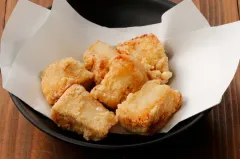
トリキの唐揚
鸡胸肉日式炸鸡块,带利尻海带与烤飞鱼干的鲜味;「トリキ」是鸟贵族的简称鶏むね肉の唐揚。利尻昆布と焼きあごのうま味。「トリキ」は鳥貴族の略称
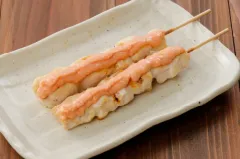
むね明太マヨ焼
鸡胸肉串抹上北海道产明太子蛋黄酱烤制むね肉に北海道産明太子のマヨネーズをのせて焼いた串
展示各店菜单中的叫法与示例。菜品、做法和供应情况可能调整,以门店当日菜单为准。店铺菜品图片来源见完整词典的图片出处。各チェーン店でのメニュー表記例です。季節や店舗により変更となる場合があります。画像出典は菜单词典をご覧ください。