01它是什么,来自哪里?どんな部位?どこから来る?
用日语读一读 · 日本語で読む
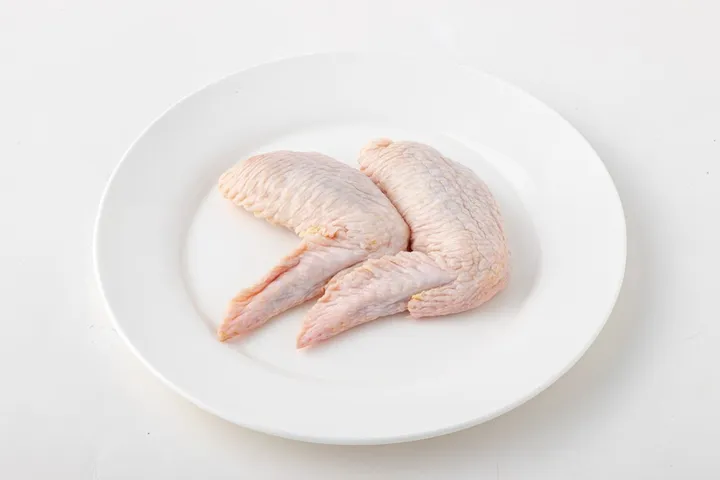
手羽(翼の上腕から先端まで)から上腕部分の「手羽もと」を除いた残り。橈骨・尺骨部分の「手羽なか」と先端部分の「手羽はし」から成る
The wing (upper arm to tip) minus the upper-arm drumette (tebamoto): the flat (tebanaka, the radius-and-ulna section) plus the tip (tebahashi)
中国語・英語の解説を見る
整只翅膀(从上臂到翅尖)去掉上臂部分“翅根”(手羽もと)后剩下的部分,由桡骨和尺骨段的“翅中”(手羽なか)和末端的“翅尖”(手羽はし)组成
The wing (upper arm to tip) minus the upper-arm drumette (tebamoto): the flat (tebanaka, the radius-and-ulna section) plus the tip (tebahashi)
02名字背后,还有这些故事。名前の由来とストーリー。
富含胶质和脂肪,鲜味浓:若鸡带皮生翅(手羽先)每100克207千卡、脂肪16.2克,重量的40%是骨头。把翅中纵向劈成两半的叫“鸡肋排”(鶏スペアリブ)。烤鸡串店里,京桥伊势广连骨剁块撒盐烤,鸟贵族则盐味和酱汁都有。名古屋名物“炸鸡翅”以1963年创业的“风来坊”自称元祖;据该店说,当时鸡翅几乎只用来熬汤,某天因订货失误整鸡没到货,才把鸡翅蘸上秘制酱汁端上桌。
ゼラチン質と脂質が多くうま味が濃い部位で、若どりの手羽さき(皮つき・生)は100gあたり207kcal・脂質16.2g、重量の40%が骨。手羽なかを縦半分に割ったものは「鶏スペアリブ」と呼ばれる。焼き鳥では京橋の伊勢廣が骨ごとぶつ切りにして塩で焼き、鳥貴族は塩とタレの両方で出す。名古屋名物の手羽先唐揚げは1963年創業の「風来坊」が元祖を名乗り、手羽先がスープの材料程度にしか使われなかった時代、発注ミスで丸鶏が届かなかった日に生まれたという。
再挑战一下日语原文 · 日本語で読む
ゼラチン質と脂質が多くうま味が濃い部位で、若どりの手羽さき(皮つき・生)は100gあたり207kcal・脂質16.2g、重量の40%が骨。手羽なかを縦半分に割ったものは「鶏スペアリブ」と呼ばれる。焼き鳥では京橋の伊勢廣が骨ごとぶつ切りにして塩で焼き、鳥貴族は塩とタレの両方で出す。名古屋名物の手羽先唐揚げは1963年創業の「風来坊」が元祖を名乗り、手羽先がスープの材料程度にしか使われなかった時代、発注ミスで丸鶏が届かなかった日に生まれたという。
Rich in gelatin and fat, with deep flavour: raw skin-on tebasaki from young chickens has 207 kcal and 16.2 g fat per 100 g, and 40% of its weight is bone. A flat split lengthwise is sold as “chicken spare ribs”. Ise-hiro in Kyōbashi chops it bone-in and salt-grills it; Torikizoku offers salt or tare. Nagoya's famous fried wings are claimed by Fūraibō (founded 1963), which says they were born when wings went mostly into stock and a mis-order left the shop without whole chickens one day.
中国語・英語の原文を見る
富含胶质和脂肪,鲜味浓:若鸡带皮生翅(手羽先)每100克207千卡、脂肪16.2克,重量的40%是骨头。把翅中纵向劈成两半的叫“鸡肋排”(鶏スペアリブ)。烤鸡串店里,京桥伊势广连骨剁块撒盐烤,鸟贵族则盐味和酱汁都有。名古屋名物“炸鸡翅”以1963年创业的“风来坊”自称元祖;据该店说,当时鸡翅几乎只用来熬汤,某天因订货失误整鸡没到货,才把鸡翅蘸上秘制酱汁端上桌。
Rich in gelatin and fat, with deep flavour: raw skin-on tebasaki from young chickens has 207 kcal and 16.2 g fat per 100 g, and 40% of its weight is bone. A flat split lengthwise is sold as “chicken spare ribs”. Ise-hiro in Kyōbashi chops it bone-in and salt-grills it; Torikizoku offers salt or tare. Nagoya's famous fried wings are claimed by Fūraibō (founded 1963), which says they were born when wings went mostly into stock and a mis-order left the shop without whole chickens one day.
03到了店里,它叫什么?お店ではどう呼ばれる?
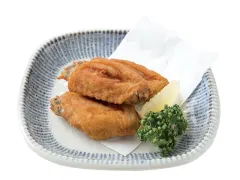
若どり手羽揚げ
用自制炸鸡粉炸的嫩鸡翅(翅中连翅尖)若どりの手羽先を自家製の唐揚粉で揚げたもの
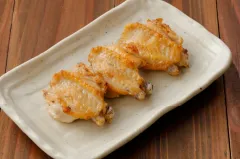
手羽先塩
用岩盐烤的鸡翅手羽先を岩塩で焼いたもの
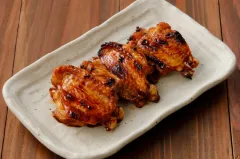
手羽先たれ
刷酱汁烤的鸡翅手羽先をたれで焼いたもの
展示各店菜单中的叫法与示例。菜品、做法和供应情况可能调整,以门店当日菜单为准。店铺菜品图片来源见完整词典的图片出处。各チェーン店でのメニュー表記例です。季節や店舗により変更となる場合があります。画像出典は菜单词典をご覧ください。