01它是什么,来自哪里?どんな部位?どこから来る?
用日语读一读 · 日本語で読む
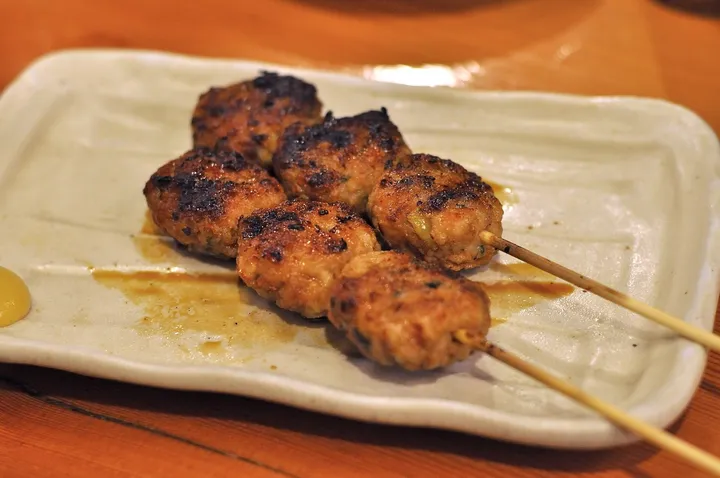
鶏肉をたたいて細かくし、卵や山芋などのつなぎを加えて手でこね、丸めたもの。焼き鳥では串に刺して焼く
Chicken chopped fine, bound with egg, grated yam or the like, kneaded by hand and shaped into balls; at yakitori shops, skewered and grilled
中国語・英語の解説を見る
把鸡肉剁碎,加鸡蛋、山药等作粘合剂,用手揉捏成团;烤鸡串店把它串起来烤
Chicken chopped fine, bound with egg, grated yam or the like, kneaded by hand and shaped into balls; at yakitori shops, skewered and grilled
02名字背后,还有这些故事。名前の由来とストーリー。
来自动词“つくねる”(捏ねる,揉捏)的连用形名词化,指用手揉捏成团;“つくねる”有捆扎、揉捏之意。配方和形状各店不同:1921年创业的京桥老店伊势广称之为“团子”,完全不加粘合剂、拌入麻籽,据说老师傅仅凭手感就能把每个的重量误差控制在2克以内。鸟贵族则有加紫苏叶的“盐味つくね”,以及酱汁つくね和芝士つくね。
動詞「つくねる(捏ねる)」の連用形が名詞になった語で、手でこねて丸く固めることをいう(「つくねる」は束ねる・こねるの意)。配合や形は店ごとに異なり、京橋の伊勢廣(1921年創業)は「団子」の名で、つなぎを一切使わず麻の実を加えたものを出し、職人は手の感覚だけで重さの誤差を2g以内にそろえるという。鳥貴族は大葉を合わせた「つくね塩」のほか、「つくねたれ」「つくねチーズ焼」を出す。
再挑战一下日语原文 · 日本語で読む
動詞「つくねる(捏ねる)」の連用形が名詞になった語で、手でこねて丸く固めることをいう(「つくねる」は束ねる・こねるの意)。配合や形は店ごとに異なり、京橋の伊勢廣(1921年創業)は「団子」の名で、つなぎを一切使わず麻の実を加えたものを出し、職人は手の感覚だけで重さの誤差を2g以内にそろえるという。鳥貴族は大葉を合わせた「つくね塩」のほか、「つくねたれ」「つくねチーズ焼」を出す。
The noun form of the verb tsukuneru, “to knead into a ball by hand” (the verb also means to bundle together). Recipes and shapes vary by shop: Ise-hiro in Kyōbashi (founded 1921) serves it as dango (“dumpling”), made with no binder at all and studded with hemp seeds, and says its cooks shape each one to within 2 g by feel alone. Torikizoku offers it salted with shiso leaf, with tare, or grilled with cheese.
中国語・英語の原文を見る
来自动词“つくねる”(捏ねる,揉捏)的连用形名词化,指用手揉捏成团;“つくねる”有捆扎、揉捏之意。配方和形状各店不同:1921年创业的京桥老店伊势广称之为“团子”,完全不加粘合剂、拌入麻籽,据说老师傅仅凭手感就能把每个的重量误差控制在2克以内。鸟贵族则有加紫苏叶的“盐味つくね”,以及酱汁つくね和芝士つくね。
The noun form of the verb tsukuneru, “to knead into a ball by hand” (the verb also means to bundle together). Recipes and shapes vary by shop: Ise-hiro in Kyōbashi (founded 1921) serves it as dango (“dumpling”), made with no binder at all and studded with hemp seeds, and says its cooks shape each one to within 2 g by feel alone. Torikizoku offers it salted with shiso leaf, with tare, or grilled with cheese.
03到了店里,它叫什么?お店ではどう呼ばれる?
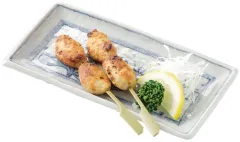
つくね
以嫩鸡肉为主、掺入几种肉做的鸡肉丸,刷酱汁烤若どりをベースに数種類の肉を合わせたつくねのタレ焼き
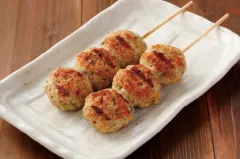
つくね塩
带紫苏叶香的鸡肉丸,盐烤大葉が香るつくねの塩焼き
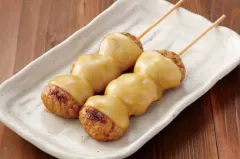
つくねチーズ焼
酱汁烤鸡肉丸,上面盖奶酪たれで焼いたつくねにチーズをかけたもの
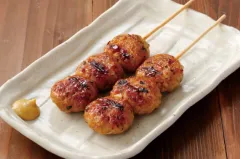
つくねたれ
刷酱汁烤的鸡肉丸つくねのたれ焼き
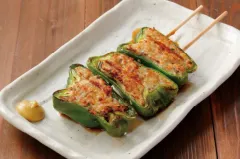
ピーマン肉詰
青椒里塞入鸡肉丸馅烤成的串,橙醋味ピーマンにつくねを詰めて焼いた串。ポン酢味
展示各店菜单中的叫法与示例。菜品、做法和供应情况可能调整,以门店当日菜单为准。店铺菜品图片来源见完整词典的图片出处。各チェーン店でのメニュー表記例です。季節や店舗により変更となる場合があります。画像出典は菜单词典をご覧ください。