01它是什么,来自哪里?どんな部位?どこから来る?
用日语读一读 · 日本語で読む
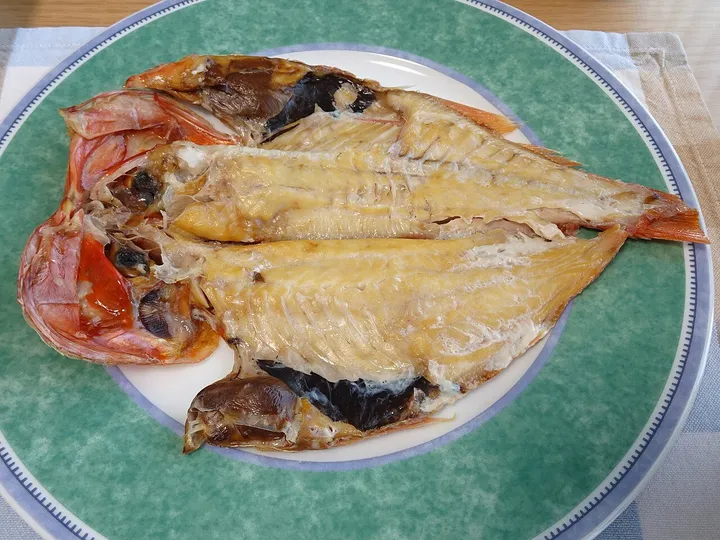
魚介類を生のまま、または塩をして干したもの。開き・丸干し・一夜干しなど
Fish or shellfish dried raw or after salting: split (hiraki), whole (maruboshi), overnight-dried (ichiyaboshi) and more
中国語・英語の解説を見る
把鱼贝生的或抹盐后晒干的食品,有剖开晒(開き)、整条晒(丸干し)、一夜干等
Fish or shellfish dried raw or after salting: split (hiraki), whole (maruboshi), overnight-dried (ichiyaboshi) and more
02名字背后,还有这些故事。名前の由来とストーリー。
按制法可分为不加盐直接晒的素干(鱿鱼干、鲱鱼干)、抹盐后晒的盐干(竹荚鱼、鲭鱼、秋刀鱼的开片干,沙丁鱼整条干、“目刺”)、煮后晒的煮干、烤后晒的烤干,以及味醂干等调味干;一般说“干物”多指盐干。“開き”是把鱼从背部或腹部剖开晒干,“一夜干し”是轻轻撒盐后吹一夜风晾干。过去为了耐放晒得很干,如今更受欢迎的是含水约60%—70%的半干品,晒干更多成了增添鲜味的手段。
製法により、塩をせずに干す素干し(するめ・身欠きにしん)、塩をして干す塩干し(アジ・サバ・サンマの開き、イワシの丸干し・目刺し)、煮てから干す煮干し、焼いてから干す焼干し、みりん干しなどの調味干しに分けられ、ふつう「干物」といえば塩干しを指す。開きは魚を背開きまたは腹開きにして干したもの、一夜干しは軽く塩をした魚を一晩外気に当てて干したもの。
かつては日持ちさせるために強く干したが、今は水分60〜70%ほどの生干しが好まれ、干すことはうま味を引き出す手段になっている。
再挑战一下日语原文 · 日本語で読む
製法により、塩をせずに干す素干し(するめ・身欠きにしん)、塩をして干す塩干し(アジ・サバ・サンマの開き、イワシの丸干し・目刺し)、煮てから干す煮干し、焼いてから干す焼干し、みりん干しなどの調味干しに分けられ、ふつう「干物」といえば塩干しを指す。開きは魚を背開きまたは腹開きにして干したもの、一夜干しは軽く塩をした魚を一晩外気に当てて干したもの。かつては日持ちさせるために強く干したが、今は水分60〜70%ほどの生干しが好まれ、干すことはうま味を引き出す手段になっている。
By method there are suboshi (dried unsalted, e.g. surume squid, migaki herring), shiboshi (salted then dried: split aji, saba or sanma, whole iwashi and mezashi), niboshi (boiled then dried), yakiboshi (grilled then dried) and seasoned types such as mirin-boshi; “himono” usually means the salted kind. Hiraki is fish split open from the back or the belly and dried; ichiyaboshi is lightly salted fish left out in the air overnight. Fish were once dried hard to keep, but today semi-dried fish of about 60–70% moisture is preferred, and drying is used more to develop flavour than to preserve.
中国語・英語の原文を見る
按制法可分为不加盐直接晒的素干(鱿鱼干、鲱鱼干)、抹盐后晒的盐干(竹荚鱼、鲭鱼、秋刀鱼的开片干,沙丁鱼整条干、“目刺”)、煮后晒的煮干、烤后晒的烤干,以及味醂干等调味干;一般说“干物”多指盐干。“開き”是把鱼从背部或腹部剖开晒干,“一夜干し”是轻轻撒盐后吹一夜风晾干。过去为了耐放晒得很干,如今更受欢迎的是含水约60%—70%的半干品,晒干更多成了增添鲜味的手段。
By method there are suboshi (dried unsalted, e.g. surume squid, migaki herring), shiboshi (salted then dried: split aji, saba or sanma, whole iwashi and mezashi), niboshi (boiled then dried), yakiboshi (grilled then dried) and seasoned types such as mirin-boshi; “himono” usually means the salted kind. Hiraki is fish split open from the back or the belly and dried; ichiyaboshi is lightly salted fish left out in the air overnight. Fish were once dried hard to keep, but today semi-dried fish of about 60–70% moisture is preferred, and drying is used more to develop flavour than to preserve.