01它是什么,来自哪里?どんな部位?どこから来る?
用日语读一读 · 日本語で読む
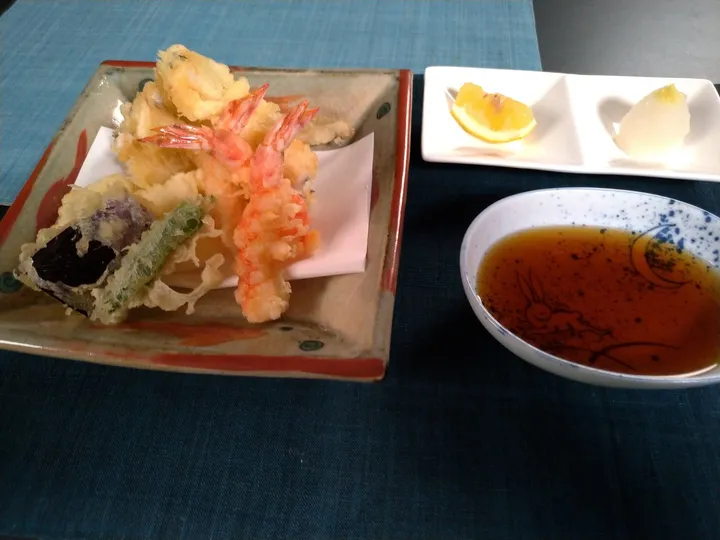
魚介や野菜に、小麦粉を卵と水で溶いた衣をつけて植物油で揚げたもの
Seafood or vegetables coated in a batter of flour, egg and water and deep-fried in vegetable oil
中国語・英語の解説を見る
鱼贝、蔬菜裹上用鸡蛋和水调开的面衣,用植物油炸
Seafood or vegetables coated in a batter of flour, egg and water and deep-fried in vegetable oil
02名字背后,还有这些故事。名前の由来とストーリー。
江户时代上方(京都、大阪)与江户的“天ぷら”并不是一回事:上方指油炸的鱼浆(即今天的萨摩扬),江户则指挂面衣炸的东西。如今西日本仍有地方把萨摩扬叫“天ぷら”。在江户,天妇罗作为路边摊上站着吃的小吃流行开来,特色是用芝麻油炸虾、沙鮻、乌贼、星鳗等江户前海鲜,炸好一样吃一样。词源有葡萄牙语 tempero(烹调)、têmporas(四季斋日)等说法,但至今没有找到能证实的当时文献。
江戸時代は上方と江戸で中身が違い、上方では魚のすり身を揚げたもの(今の薩摩揚げ)、江戸では衣揚げを「てんぷら」と呼んだ。今も西日本には薩摩揚げを「てんぷら」と呼ぶ所がある。江戸では屋台の立ち食いとして広まり、エビ・キス・イカ・アナゴなど江戸前の魚介をごま油で揚げ、揚げたてを次々に食べるのが特色とされる。語源はポルトガル語 tempero(調理)や têmporas(四季の斎日)などとする説があるが、決め手となる当時の文献は見つかっていない。
再挑战一下日语原文 · 日本語で読む
江戸時代は上方と江戸で中身が違い、上方では魚のすり身を揚げたもの(今の薩摩揚げ)、江戸では衣揚げを「てんぷら」と呼んだ。今も西日本には薩摩揚げを「てんぷら」と呼ぶ所がある。江戸では屋台の立ち食いとして広まり、エビ・キス・イカ・アナゴなど江戸前の魚介をごま油で揚げ、揚げたてを次々に食べるのが特色とされる。語源はポルトガル語 tempero(調理)や têmporas(四季の斎日)などとする説があるが、決め手となる当時の文献は見つかっていない。
In the Edo period the word meant different things: in Kamigata (Kyoto–Osaka) it was fried fish paste, today’s satsuma-age, while in Edo it was batter-fried food; parts of western Japan still call satsuma-age “tenpura”. In Edo it spread as stand-up street-stall food, its hallmark being Edo Bay seafood such as prawns, kisu (sillago), squid and anago fried in sesame oil and eaten piece by piece straight from the pot. Portuguese tempero (“seasoning”) or têmporas (Ember Days) and other words have been proposed as its origin, but no decisive contemporary document has been found.
中国語・英語の原文を見る
江户时代上方(京都、大阪)与江户的“天ぷら”并不是一回事:上方指油炸的鱼浆(即今天的萨摩扬),江户则指挂面衣炸的东西。如今西日本仍有地方把萨摩扬叫“天ぷら”。在江户,天妇罗作为路边摊上站着吃的小吃流行开来,特色是用芝麻油炸虾、沙鮻、乌贼、星鳗等江户前海鲜,炸好一样吃一样。词源有葡萄牙语 tempero(烹调)、têmporas(四季斋日)等说法,但至今没有找到能证实的当时文献。
In the Edo period the word meant different things: in Kamigata (Kyoto–Osaka) it was fried fish paste, today’s satsuma-age, while in Edo it was batter-fried food; parts of western Japan still call satsuma-age “tenpura”. In Edo it spread as stand-up street-stall food, its hallmark being Edo Bay seafood such as prawns, kisu (sillago), squid and anago fried in sesame oil and eaten piece by piece straight from the pot. Portuguese tempero (“seasoning”) or têmporas (Ember Days) and other words have been proposed as its origin, but no decisive contemporary document has been found.
03到了店里,它叫什么?お店ではどう呼ばれる?
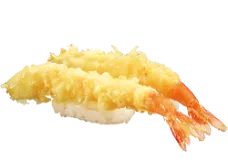
えび天握り
铺炸虾天妇罗的握寿司(虾产自泰国、越南等);官网中文名「炸虾天妇罗」えびの天ぷらをのせたにぎり(えびはタイ・ベトナム産など)
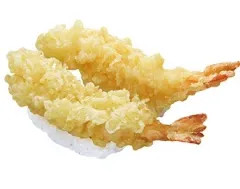
えび天にぎり
铺炸虾天妇罗的握寿司(虾产自越南等)えびの天ぷらをのせたにぎり(えびはベトナム産など)
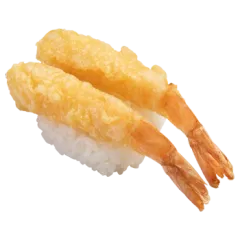
えび天にぎり
铺炸虾天妇罗的握寿司(虾产自越南等)えびの天ぷらをのせたにぎり(えびはベトナム産など)
展示各店菜单中的叫法与示例。菜品、做法和供应情况可能调整,以门店当日菜单为准。店铺菜品图片来源见完整词典的图片出处。各チェーン店でのメニュー表記例です。季節や店舗により変更となる場合があります。画像出典は菜单词典をご覧ください。