01它是什么,来自哪里?どんな部位?どこから来る?
用日语读一读 · 日本語で読む
心臓(心筋)
The heart (cardiac muscle)
中国語・英語の解説を見る
心脏(心肌)
The heart (cardiac muscle)
02名字背后,还有这些故事。名前の由来とストーリー。
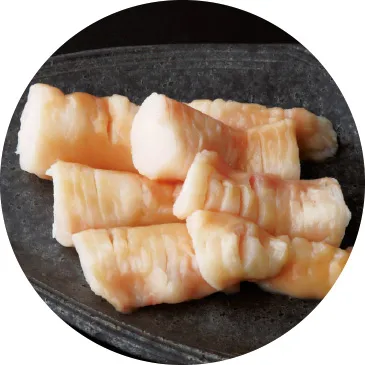
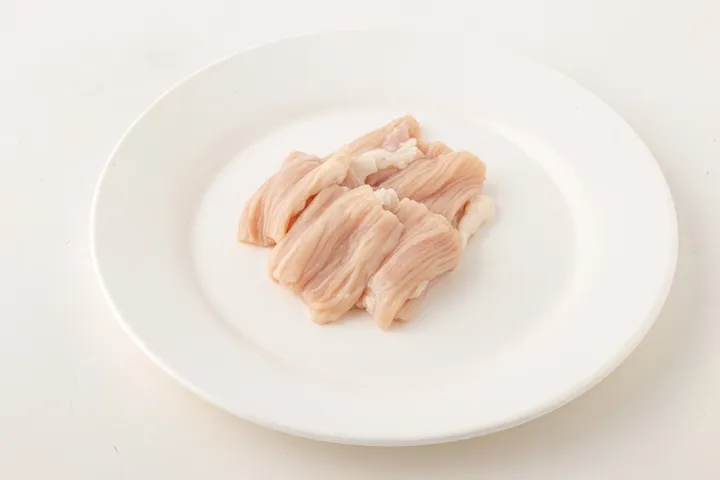
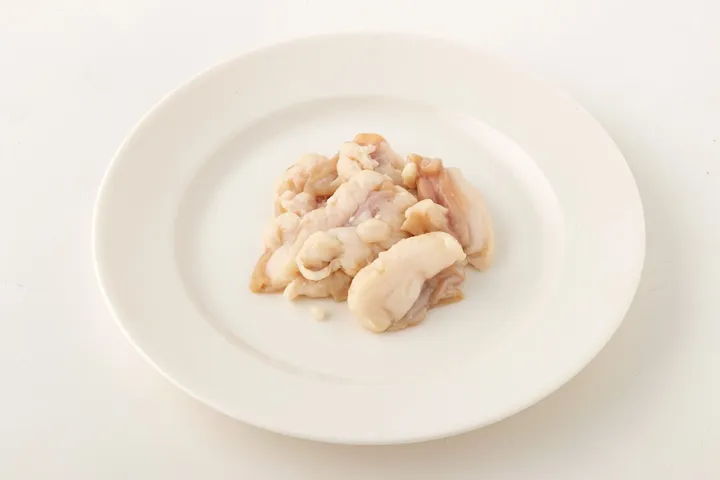
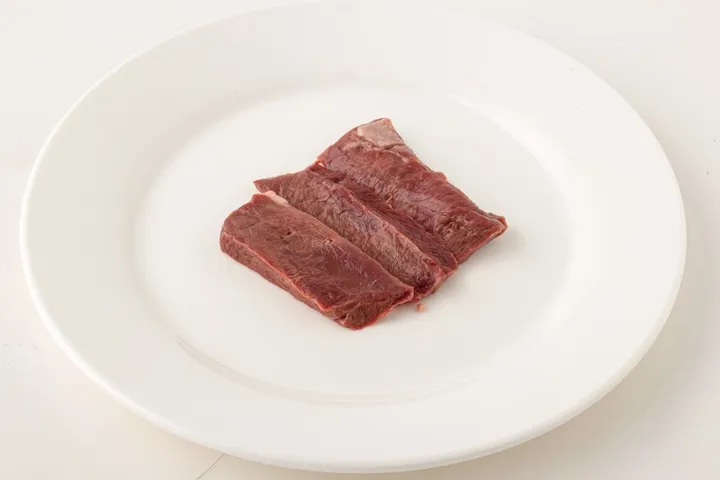
来自英语 heart。心肌组织致密、纤维细,口感脆而利落,脂肪和腥味都少,味道清淡。连着心脏的大动脉另算一个部位,叫「ハツモト」(又叫「コリコリ」)(日本畜产副产物协会推广的部位标示)。行业里它和肝脏等同属「赤物」(红色内脏),赤物在夏季多作为烤肉食材,消费量较大。
英語の heart から。心筋は組織が緻密で筋繊維が細かく、コリコリと歯切れがよく、脂肪や臭みが少なく味は淡白。心臓につながる大動脈は「ハツモト」(別名コリコリ)として別の部位に分けられる(日本畜産副産物協会が普及を図る部位表示)。業界では肝臓などとともに「赤物」に分類され、赤物は夏場に焼肉の材料としてよく消費される傾向がある。
再挑战一下日语原文 · 日本語で読む
英語の heart から。心筋は組織が緻密で筋繊維が細かく、コリコリと歯切れがよく、脂肪や臭みが少なく味は淡白。心臓につながる大動脈は「ハツモト」(別名コリコリ)として別の部位に分けられる(日本畜産副産物協会が普及を図る部位表示)。業界では肝臓などとともに「赤物」に分類され、赤物は夏場に焼肉の材料としてよく消費される傾向がある。
From English “heart”. Dense cardiac muscle with fine fibres gives a crisp, clean bite; it is lean, mild and has little offal smell. The aorta attached to it is a separate cut, hatsumoto (also korikori), in the parts labelling promoted by the Japan Animal By-products Association. The trade classes it with the liver as akamono (“red offal”), which is eaten more in summer, much of it as yakiniku.
中国語・英語の原文を見る
来自英语 heart。心肌组织致密、纤维细,口感脆而利落,脂肪和腥味都少,味道清淡。连着心脏的大动脉另算一个部位,叫「ハツモト」(又叫「コリコリ」)(日本畜产副产物协会推广的部位标示)。行业里它和肝脏等同属「赤物」(红色内脏),赤物在夏季多作为烤肉食材,消费量较大。
From English “heart”. Dense cardiac muscle with fine fibres gives a crisp, clean bite; it is lean, mild and has little offal smell. The aorta attached to it is a separate cut, hatsumoto (also korikori), in the parts labelling promoted by the Japan Animal By-products Association. The trade classes it with the liver as akamono (“red offal”), which is eaten more in summer, much of it as yakiniku.