01它是什么,来自哪里?どんな部位?どこから来る?
用日语读一读 · 日本語で読む
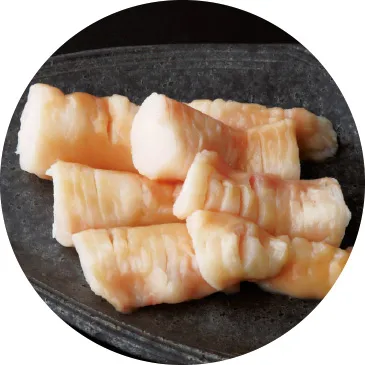
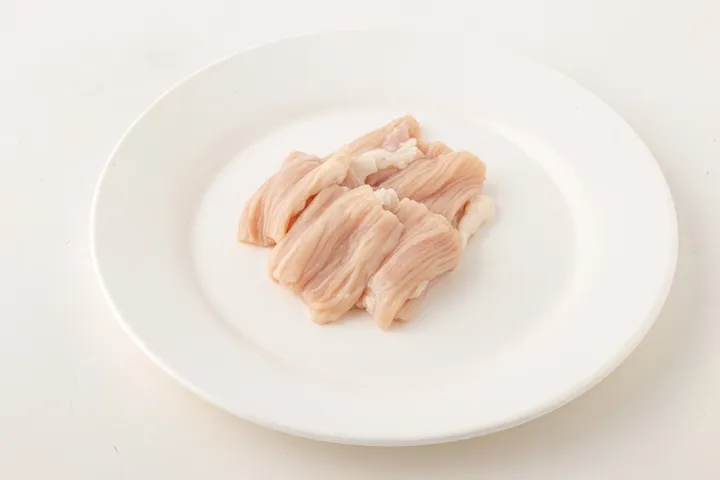
3番目の胃(葉胃・重弁胃)で、内側に薄いひだが何枚も重なる
The third stomach (omasum), lined with many thin, leaf-like folds
中国語・英語の解説を見る
第三个胃(瓣胃),内壁是层层叠叠的薄褶
The third stomach (omasum), lined with many thin, leaf-like folds
02名字背后,还有这些故事。名前の由来とストーリー。
据说因褶皱层层叠叠、看上去有“千枚”而得名;韩语也把第三胃叫 천엽(千叶),英语叫 book tripe,不过《数字大辞泉》认为词源不详。脂肪少,口感爽脆有嚼劲,每100克生百叶含57千卡、脂肪1.3克、铁6.8毫克(日本食品标准成分表)。市面上一般卖的是已经煮过的。
ひだが何層にも重なり「千枚」あるように見えることからの名とされ、韓国語でも第三胃を천엽(千葉)、英語ではブックトライプ(book tripe)と呼ぶが、デジタル大辞泉は語源未詳とする。脂肪が少なくシコシコした食感で、生100gあたり57kcal・脂質1.3g・鉄6.8mgを含む(日本食品標準成分表)。一般にゆでたものが売られている。
再挑战一下日语原文 · 日本語で読む
ひだが何層にも重なり「千枚」あるように見えることからの名とされ、韓国語でも第三胃を천엽(千葉)、英語ではブックトライプ(book tripe)と呼ぶが、デジタル大辞泉は語源未詳とする。脂肪が少なくシコシコした食感で、生100gあたり57kcal・脂質1.3g・鉄6.8mgを含む(日本食品標準成分表)。一般にゆでたものが売られている。
It is said to be named for its “thousand sheets” (sen-mai) of folds—Korean likewise calls the omasum cheonyeop, “thousand leaves”, and English “book tripe”—though the Digital Daijisen calls the etymology unknown. Low in fat with a crisp, springy bite, 100 g raw has 57 kcal, 1.3 g fat and 6.8 mg iron (Standard Tables of Food Composition in Japan). It is generally sold already boiled.
中国語・英語の原文を見る
据说因褶皱层层叠叠、看上去有“千枚”而得名;韩语也把第三胃叫 천엽(千叶),英语叫 book tripe,不过《数字大辞泉》认为词源不详。脂肪少,口感爽脆有嚼劲,每100克生百叶含57千卡、脂肪1.3克、铁6.8毫克(日本食品标准成分表)。市面上一般卖的是已经煮过的。
It is said to be named for its “thousand sheets” (sen-mai) of folds—Korean likewise calls the omasum cheonyeop, “thousand leaves”, and English “book tripe”—though the Digital Daijisen calls the etymology unknown. Low in fat with a crisp, springy bite, 100 g raw has 57 kcal, 1.3 g fat and 6.8 mg iron (Standard Tables of Food Composition in Japan). It is generally sold already boiled.