01它是什么,来自哪里?どんな部位?どこから来る?
用日语读一读 · 日本語で読む
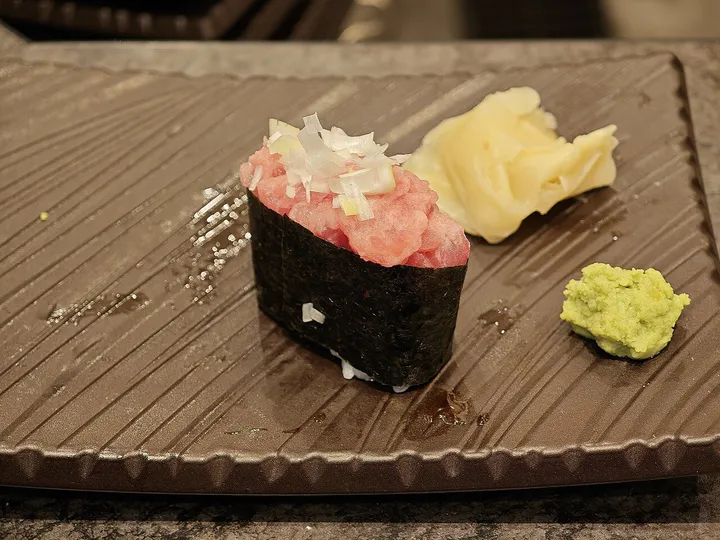
マグロの身を細かく叩いてペースト状にし、刻みネギを合わせたもの。考案した店では頭や尾に近い筋の多い部分を使った
Tuna chopped to a paste with chopped scallion; the shop that devised it used sinewy meat from near the head and tail
中国語・英語の解説を見る
把金枪鱼肉剁成泥,再配上葱花;发明它的店当初用的是靠近头尾、筋多的部分
Tuna chopped to a paste with chopped scallion; the shop that devised it used sinewy meat from near the head and tail
02名字背后,还有这些故事。名前の由来とストーリー。
一说1964年(昭和39年),浅草金太楼鮨的时任会长间根山贞雄把做不了刺身和寿司的筋多部分剁碎,配上作佐料的葱放在米饭上,这就是ネギトロ的起源。按该店的说法,名字是模仿浅草“麦とろ”(山药泥麦饭)的谐音;词典一般解释为“ネギ(葱)+トロ”,另有一说认为来自把骨边的肉“ねぎ取る”(刮下来),流传也很广。市售品中也有用黄鳍、大眼金枪鱼肉加食用油脂来补足油脂感的。
一説に1964年(昭和39年)、浅草の金太楼鮨で当時の会長・間根山貞雄が、刺身や寿司に使いにくい筋の部分を叩き、薬味のネギを合わせて飯にのせたのが始まりとされる。名は同店によれば浅草の「麦とろ」との語呂合わせで、辞書類は「ネギ+トロ」と解するが、骨まわりの身を「ねぎ取る(こそげ取る)」ことに由来するという説も広まっている。
市販品にはキハダ・メバチの身に食用油脂を加えて脂ののりを補ったものもある。
再挑战一下日语原文 · 日本語で読む
一説に1964年(昭和39年)、浅草の金太楼鮨で当時の会長・間根山貞雄が、刺身や寿司に使いにくい筋の部分を叩き、薬味のネギを合わせて飯にのせたのが始まりとされる。名は同店によれば浅草の「麦とろ」との語呂合わせで、辞書類は「ネギ+トロ」と解するが、骨まわりの身を「ねぎ取る(こそげ取る)」ことに由来するという説も広まっている。市販品にはキハダ・メバチの身に食用油脂を加えて脂ののりを補ったものもある。
One account credits Asakusa’s Kintarō-zushi in 1964, when its chairman Manezan Sadao minced sinewy meat unsuited to sashimi or sushi, added scallion meant as a garnish and served it on rice. The shop says the name is a pun on mugi-toro (grated yam on barley rice); dictionaries read it as negi (scallion) + toro, and another widely repeated theory derives it from negitoru, “to scrape off” the meat round the bones. Some commercial negitoro is yellowfin and bigeye with added edible fat to make it richer.
中国語・英語の原文を見る
一说1964年(昭和39年),浅草金太楼鮨的时任会长间根山贞雄把做不了刺身和寿司的筋多部分剁碎,配上作佐料的葱放在米饭上,这就是ネギトロ的起源。按该店的说法,名字是模仿浅草“麦とろ”(山药泥麦饭)的谐音;词典一般解释为“ネギ(葱)+トロ”,另有一说认为来自把骨边的肉“ねぎ取る”(刮下来),流传也很广。市售品中也有用黄鳍、大眼金枪鱼肉加食用油脂来补足油脂感的。
One account credits Asakusa’s Kintarō-zushi in 1964, when its chairman Manezan Sadao minced sinewy meat unsuited to sashimi or sushi, added scallion meant as a garnish and served it on rice. The shop says the name is a pun on mugi-toro (grated yam on barley rice); dictionaries read it as negi (scallion) + toro, and another widely repeated theory derives it from negitoru, “to scrape off” the meat round the bones. Some commercial negitoro is yellowfin and bigeye with added edible fat to make it richer.
同一条鱼,三个部位。一匹のマグロ、3つの部位。
| 菜单上的名字メニュー名 | 来自哪里部位・特徴 |
|---|---|
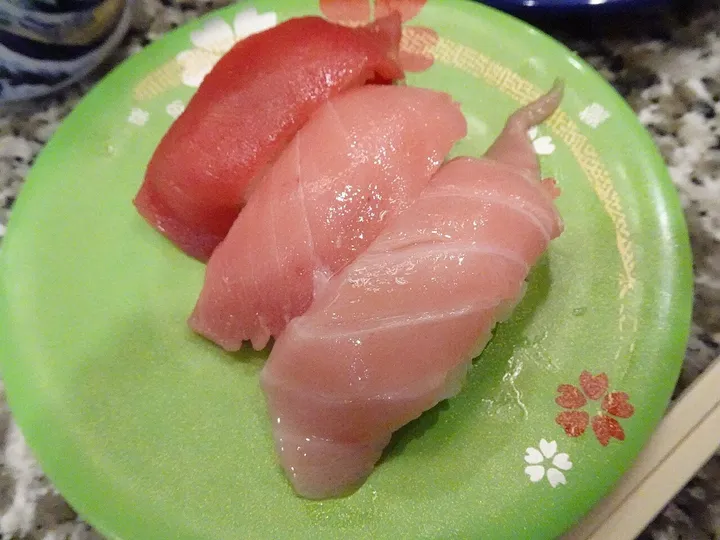
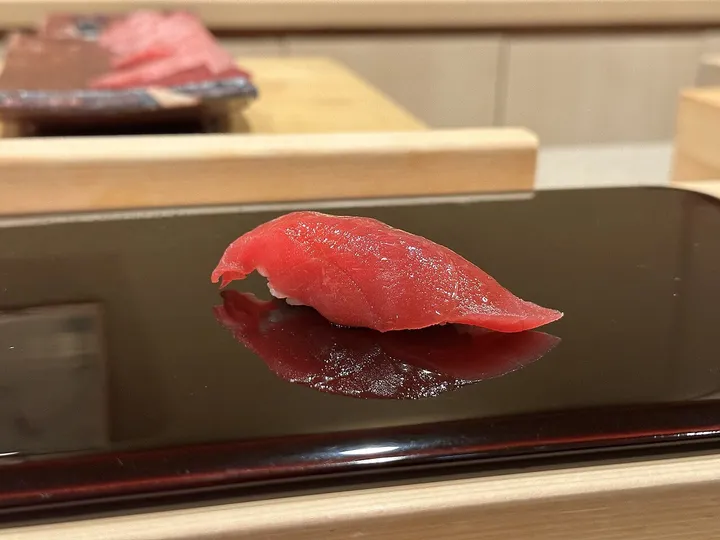
| 赤身金枪鱼红肉(瘦肉)マグロの赤い身(脂の少ない部分) | 背部的肉和靠近脊骨的内侧肉,与腹部多脂的“トロ”相对背側の身と、骨に近い内側の身。腹側の脂の多いトロに対する部分 |
| 中トロ金枪鱼中腹(中脂)中程度に脂ののったマグロの腹身 | 腹部中段到尾侧的肉(称“腹ナカ”“腹シモ”)腹側の中央から尾にかけての身(「腹ナカ」「腹シモ」) |
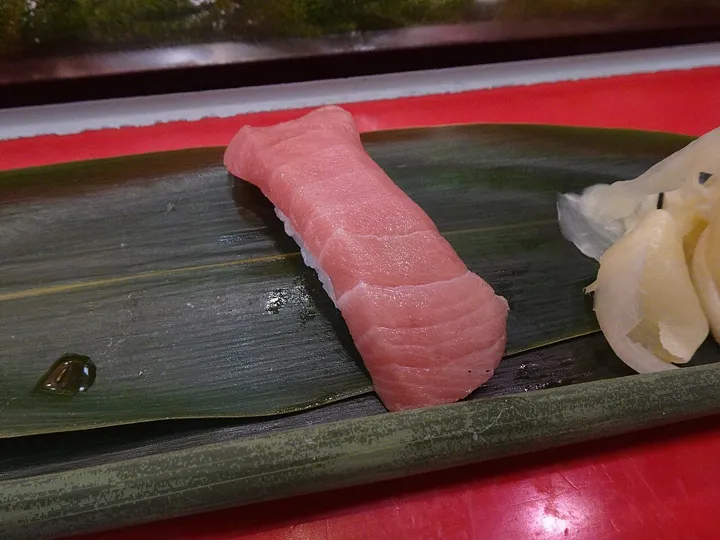
| 大トロ金枪鱼大腹(大脂)最も脂ののったマグロの腹身 | 腹部靠头、紧挨“カマ”(鳃下胸鳍根部)的部分(称“腹カミ”)腹側の頭寄り、カマに近い部分(「腹カミ」) |
点击名字,继续认识对应部位。资料出处见各词条。名前をクリックして各部位の解説をご覧ください。
03到了店里,它叫什么?お店ではどう呼ばれる?
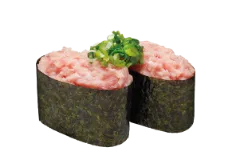
まぐろたたき軍艦
剁碎的金枪鱼加葱花的军舰卷,形式同葱花金枪鱼腩(ネギトロ);这里的「たたき」指剁碎,不是炙烤;官网中文名「金枪鱼泥军舰」たたいて細かくしたまぐろにねぎをのせた軍艦。ネギトロと同じ形。この「たたき」は炙りではなく刻むこと
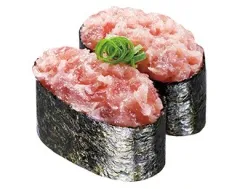
ねぎまぐろ軍艦
剁碎的黄鳍、大眼金枪鱼等配葱花的军舰卷,形式同葱花金枪鱼腩(ネギトロ)キハダ・メバチ等のまぐろをたたき、ねぎと合わせた軍艦。ネギトロと同じ形
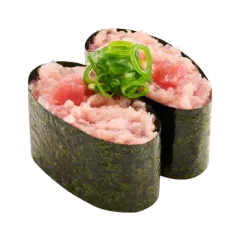
ねぎまぐろ軍艦
剁碎的金枪鱼加葱花的军舰卷,形式同葱花金枪鱼腩(ネギトロ);官网中文名「青葱金枪鱼泥军舰」細かくたたいたまぐろに刻みねぎをのせた軍艦。ネギトロと同じ形
展示各店菜单中的叫法与示例。菜品、做法和供应情况可能调整,以门店当日菜单为准。店铺菜品图片来源见完整词典的图片出处。各チェーン店でのメニュー表記例です。季節や店舗により変更となる場合があります。画像出典は菜单词典をご覧ください。