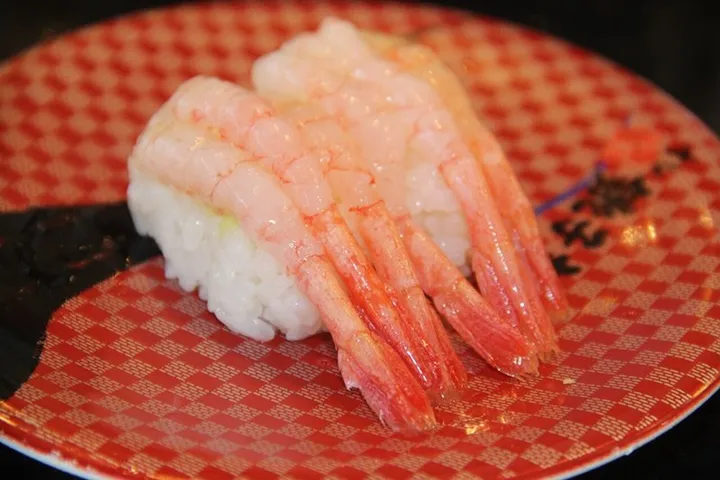
01它是什么,来自哪里?どんな部位?どこから来る?
用日语读一读 · 日本語で読む
タラバエビ科のホッコクアカエビ(標準和名)の生の身。刺身やすし種にする
Raw meat of the pink shrimp Pandalus eous (standard name hokkoku-aka-ebi), eaten as sashimi and sushi
中国語・英語の解説を見る
长额虾科北国赤虾(标准和名ホッコクアカエビ)的生虾肉,做刺身或寿司料
Raw meat of the pink shrimp Pandalus eous (standard name hokkoku-aka-ebi), eaten as sashimi and sushi
02名字背后,还有这些故事。名前の由来とストーリー。
生吃有甜味,所以以“アマエビ”(甜虾)之名流通;体色通红,各地又叫“アカエビ”“ナンバンエビ”“トンガラシ”(辣椒)等。它栖息于日本海至北太平洋北部水深150—500米的泥底;也有观点把北大西洋的群体视为另一物种(北极甜虾),但水产贸易上并不区分。它先以雄性成熟,长大后转变为雌性(雄性先熟),所以大个体全是雌虾,寿命约4年。
刺身にすると甘みがあることから「アマエビ」の名で流通し、一様に赤い体色から「アカエビ」「ナンバンエビ」「トンガラシ」などの地方名もある。日本海から北太平洋北部の水深150〜500mの泥底にすみ、北大西洋のものを別種ホンホッコクアカエビとする見方もあるが、水産上は区別されていない。まず雄として成熟し、成長すると雌に性転換する(雄性先熟)ため、大型の個体はすべて雌で、寿命は4年ほど。
再挑战一下日语原文 · 日本語で読む
刺身にすると甘みがあることから「アマエビ」の名で流通し、一様に赤い体色から「アカエビ」「ナンバンエビ」「トンガラシ」などの地方名もある。日本海から北太平洋北部の水深150〜500mの泥底にすみ、北大西洋のものを別種ホンホッコクアカエビとする見方もあるが、水産上は区別されていない。まず雄として成熟し、成長すると雌に性転換する(雄性先熟)ため、大型の個体はすべて雌で、寿命は4年ほど。
It is sold as amaebi, “sweet shrimp”, for its sweetness when eaten raw, and its uniformly red body earns local names such as aka-ebi, nanban-ebi and tongarashi (“chilli”). It lives on muddy bottoms 150–500 m deep from the Sea of Japan to the northern North Pacific; some treat the North Atlantic form as a separate species, Pandalus borealis, though the trade does not distinguish them. It matures first as a male and later turns female (protandry), so all large individuals are female; it lives about four years.
中国語・英語の原文を見る
生吃有甜味,所以以“アマエビ”(甜虾)之名流通;体色通红,各地又叫“アカエビ”“ナンバンエビ”“トンガラシ”(辣椒)等。它栖息于日本海至北太平洋北部水深150—500米的泥底;也有观点把北大西洋的群体视为另一物种(北极甜虾),但水产贸易上并不区分。它先以雄性成熟,长大后转变为雌性(雄性先熟),所以大个体全是雌虾,寿命约4年。
It is sold as amaebi, “sweet shrimp”, for its sweetness when eaten raw, and its uniformly red body earns local names such as aka-ebi, nanban-ebi and tongarashi (“chilli”). It lives on muddy bottoms 150–500 m deep from the Sea of Japan to the northern North Pacific; some treat the North Atlantic form as a separate species, Pandalus borealis, though the trade does not distinguish them. It matures first as a male and later turns female (protandry), so all large individuals are female; it lives about four years.
03到了店里,它叫什么?お店ではどう呼ばれる?
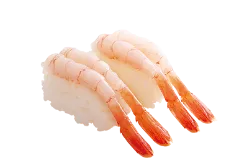
甘えび
甜虾握寿司(丹麦、加拿大、格陵兰产等)甘えびのにぎり(デンマーク・カナダ・グリーンランド産など)
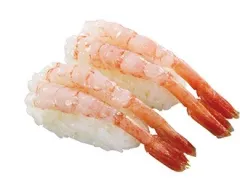
甘えび
生甜虾握寿司(加拿大产等)生の甘えびのにぎり(カナダ産など)
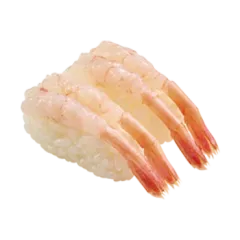
甘えび
生甜虾握寿司(加拿大、丹麦产等)生の甘えびのにぎり(カナダ・デンマーク産など)
展示各店菜单中的叫法与示例。菜品、做法和供应情况可能调整,以门店当日菜单为准。店铺菜品图片来源见完整词典的图片出处。各チェーン店でのメニュー表記例です。季節や店舗により変更となる場合があります。画像出典は菜单词典をご覧ください。