01它是什么,来自哪里?どんな部位?どこから来る?
用日语读一读 · 日本語で読む
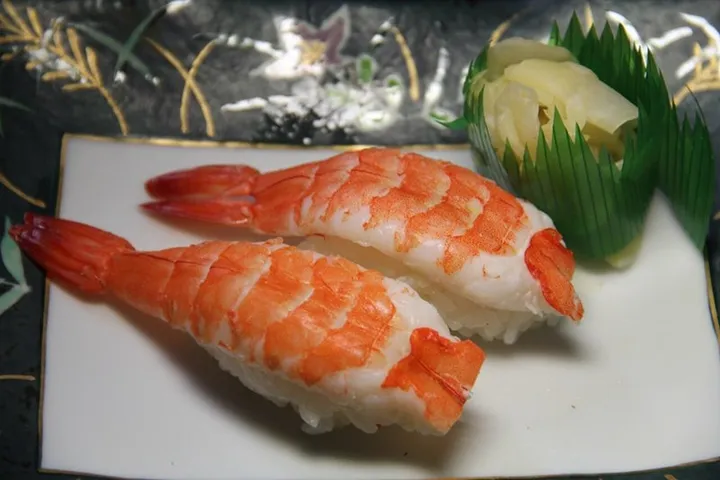
江戸前ずしではクルマエビを茹でて(煮て)使い、生のエビがすし種として広まったのは戦後
Edo-style sushi uses boiled kuruma prawns; raw shrimp became a sushi topping only after the war
中国語・英語の解説を見る
江户前寿司用煮熟的日本对虾(クルマエビ),生虾成为寿司料是在战后
Edo-style sushi uses boiled kuruma prawns; raw shrimp became a sushi topping only after the war
02名字背后,还有这些故事。名前の由来とストーリー。
日本对虾(クルマエビ)腹部弯曲时条纹像车轮,因此得名,在日本被视为最高档的虾,1960年确立了幼体大规模培育技术,从此可在陆上全人工养殖。日本人吃的虾九成以上靠进口(2018年进口158,488吨,国内捕获14,645吨),寿司料也大量使用养殖的南美白对虾(バナメイ)。“海老”的写法是日本独有的,见于平安时代的《和名类聚抄》,一般认为是把弯曲的身体和长须比作老人。
クルマエビは腹を曲げると縞模様が車輪のように見えることが名の由来で、国内ではエビ類の最高級品とされ、1960年に幼生の大量飼育技術が確立して陸上での完全養殖が可能になった。日本で食べるエビの9割以上は輸入で(2018年は輸入15万8488トン、国内漁獲1万4645トン)、すし種にも養殖のバナメイエビが広く使われる。「海老」の表記は日本独自で、平安時代の『和名類聚抄』に見え、曲がった体と長いひげを老人に見立てたものと考えられている。
再挑战一下日语原文 · 日本語で読む
クルマエビは腹を曲げると縞模様が車輪のように見えることが名の由来で、国内ではエビ類の最高級品とされ、1960年に幼生の大量飼育技術が確立して陸上での完全養殖が可能になった。日本で食べるエビの9割以上は輸入で(2018年は輸入15万8488トン、国内漁獲1万4645トン)、すし種にも養殖のバナメイエビが広く使われる。「海老」の表記は日本独自で、平安時代の『和名類聚抄』に見え、曲がった体と長いひげを老人に見立てたものと考えられている。
The kuruma prawn is named for the stripes that look like a wheel (kuruma) when it curls; Japan ranks it the finest shrimp, and mass rearing of its larvae, established in 1960, made full land-based farming possible. Over 90% of the shrimp eaten in Japan is imported (158,488 t imported against a domestic catch of 14,645 t in 2018), and farmed whiteleg shrimp is widely used for sushi. Writing ebi as 海老, “old man of the sea”, is a Japanese usage first seen in the Heian dictionary Wamyō Ruijushō, thought to liken the bent body and long feelers to an old man.
中国語・英語の原文を見る
日本对虾(クルマエビ)腹部弯曲时条纹像车轮,因此得名,在日本被视为最高档的虾,1960年确立了幼体大规模培育技术,从此可在陆上全人工养殖。日本人吃的虾九成以上靠进口(2018年进口158,488吨,国内捕获14,645吨),寿司料也大量使用养殖的南美白对虾(バナメイ)。“海老”的写法是日本独有的,见于平安时代的《和名类聚抄》,一般认为是把弯曲的身体和长须比作老人。
The kuruma prawn is named for the stripes that look like a wheel (kuruma) when it curls; Japan ranks it the finest shrimp, and mass rearing of its larvae, established in 1960, made full land-based farming possible. Over 90% of the shrimp eaten in Japan is imported (158,488 t imported against a domestic catch of 14,645 t in 2018), and farmed whiteleg shrimp is widely used for sushi. Writing ebi as 海老, “old man of the sea”, is a Japanese usage first seen in the Heian dictionary Wamyō Ruijushō, thought to liken the bent body and long feelers to an old man.
03到了店里,它叫什么?お店ではどう呼ばれる?
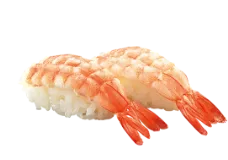
えび
熟虾握寿司(泰国、越南、印度尼西亚、印度产);官网中文名「蒸虾」火を通したえびのにぎり(タイ・ベトナム・インドネシア・インド産)
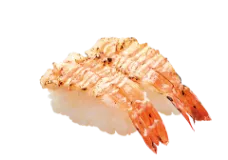
炙りえびマヨ
虾上放蛋黄酱后炙烤的握寿司えびにマヨネーズをのせて炙ったにぎり
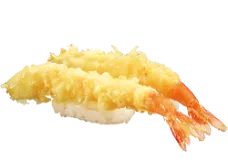
えび天握り
铺炸虾天妇罗的握寿司(虾产自泰国、越南等);官网中文名「炸虾天妇罗」えびの天ぷらをのせたにぎり(えびはタイ・ベトナム産など)
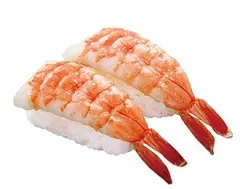
えび
熟虾握寿司(泰国产等)ゆでえびのにぎり(タイ産など)
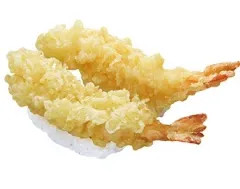
えび天にぎり
铺炸虾天妇罗的握寿司(虾产自越南等)えびの天ぷらをのせたにぎり(えびはベトナム産など)
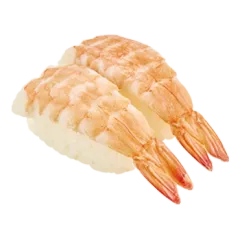
えび
熟虾握寿司(越南产等)ゆでたえびのにぎり(ベトナム産など)
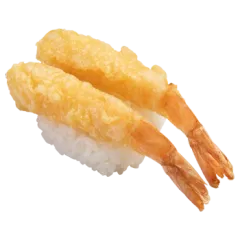
えび天にぎり
铺炸虾天妇罗的握寿司(虾产自越南等)えびの天ぷらをのせたにぎり(えびはベトナム産など)
展示各店菜单中的叫法与示例。菜品、做法和供应情况可能调整,以门店当日菜单为准。店铺菜品图片来源见完整词典的图片出处。各チェーン店でのメニュー表記例です。季節や店舗により変更となる場合があります。画像出典は菜单词典をご覧ください。