01它是什么,来自哪里?どんな部位?どこから来る?
用日语读一读 · 日本語で読む
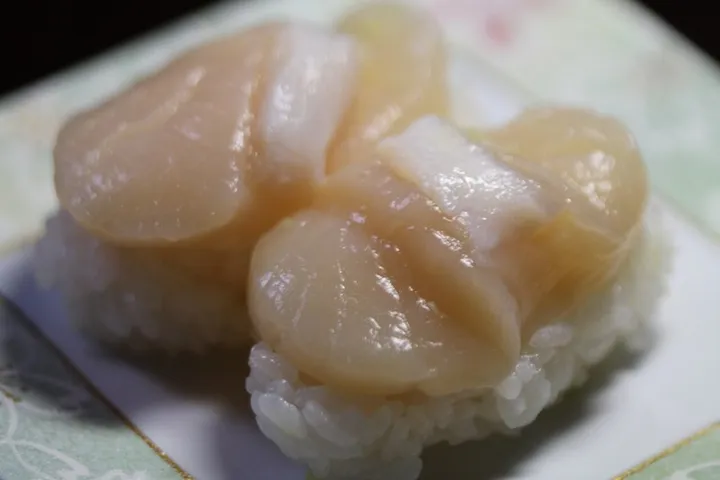
ホタテガイの貝柱(殻を閉じる後閉殻筋)。周りの外套膜「ひも」もすし種にする
The adductor muscle that closes the shell of the Japanese scallop; the surrounding mantle frill (himo) is also used for sushi
中国語・英語の解説を見る
虾夷扇贝的贝柱(闭合贝壳的后闭壳肌);周围的外套膜“ひも”(裙边)也可做寿司料
The adductor muscle that closes the shell of the Japanese scallop; the surrounding mantle frill (himo) is also used for sushi
02名字背后,还有这些故事。名前の由来とストーリー。
“帆立貝”之名源于从前以为它会把一片壳像帆一样竖起、在海面上航行;实际上它是靠猛烈开合贝壳喷水,借反冲力游动。为了游泳,贝柱特别发达,约占体重的10%—15%。日本国内产量99%以上来自北海道、青森、岩手、宫城:鄂霍次克海沿岸把幼贝撒到海底养3—4年的“地まき”,贝柱粗壮有弹性;陆奥湾、喷火湾把贝装笼或在贝耳上打孔吊养的“垂下式”,不含沙、肉质柔软。
外套膜边缘约80个黑点全是眼睛,一般认为能感知明暗。
「帆立貝」の名は、片方の殻を帆のように立てて海上を走ると考えられたことによるが、実際は殻を激しく開閉して水を噴き出し、その反動で泳ぐ。この遊泳のために貝柱が発達し、体重の約10〜15%を占める。国内生産の99%以上が北海道・青森・岩手・宮城で、オホーツク海沿岸で稚貝を海底にまいて3〜4年育てる「地まき」は貝柱が太く弾力があり、陸奥湾や噴火湾でかごに入れたり耳に穴を開けて吊るしたりして育てる「垂下式」は砂をかまず身が柔らかい。
外套膜の縁に並ぶ約80個の黒い点はすべて目で、明暗を感じているとされる。
再挑战一下日语原文 · 日本語で読む
「帆立貝」の名は、片方の殻を帆のように立てて海上を走ると考えられたことによるが、実際は殻を激しく開閉して水を噴き出し、その反動で泳ぐ。この遊泳のために貝柱が発達し、体重の約10〜15%を占める。国内生産の99%以上が北海道・青森・岩手・宮城で、オホーツク海沿岸で稚貝を海底にまいて3〜4年育てる「地まき」は貝柱が太く弾力があり、陸奥湾や噴火湾でかごに入れたり耳に穴を開けて吊るしたりして育てる「垂下式」は砂をかまず身が柔らかい。外套膜の縁に並ぶ約80個の黒い点はすべて目で、明暗を感じているとされる。
Hotate-gai, “sail-raising shell”, comes from the old belief that it raised one valve like a sail to cruise the sea; in fact it swims by clapping its valves and jetting water out. That swimming is why the adductor is so big, about 10–15% of body weight. Over 99% of Japan’s output comes from Hokkaidō, Aomori, Iwate and Miyagi: on the Okhotsk coast young scallops are sown on the seabed and grown 3–4 years (jimaki), giving thick, springy adductors, while in Mutsu Bay and Funka Bay they are hung in baskets or by a hole drilled in the hinge “ear” (suika), giving sand-free, softer meat. The roughly 80 black dots along the mantle edge are all eyes, thought to sense light and dark.
中国語・英語の原文を見る
“帆立貝”之名源于从前以为它会把一片壳像帆一样竖起、在海面上航行;实际上它是靠猛烈开合贝壳喷水,借反冲力游动。为了游泳,贝柱特别发达,约占体重的10%—15%。日本国内产量99%以上来自北海道、青森、岩手、宫城:鄂霍次克海沿岸把幼贝撒到海底养3—4年的“地まき”,贝柱粗壮有弹性;陆奥湾、喷火湾把贝装笼或在贝耳上打孔吊养的“垂下式”,不含沙、肉质柔软。外套膜边缘约80个黑点全是眼睛,一般认为能感知明暗。
Hotate-gai, “sail-raising shell”, comes from the old belief that it raised one valve like a sail to cruise the sea; in fact it swims by clapping its valves and jetting water out. That swimming is why the adductor is so big, about 10–15% of body weight. Over 99% of Japan’s output comes from Hokkaidō, Aomori, Iwate and Miyagi: on the Okhotsk coast young scallops are sown on the seabed and grown 3–4 years (jimaki), giving thick, springy adductors, while in Mutsu Bay and Funka Bay they are hung in baskets or by a hole drilled in the hinge “ear” (suika), giving sand-free, softer meat. The roughly 80 black dots along the mantle edge are all eyes, thought to sense light and dark.
03到了店里,它叫什么?お店ではどう呼ばれる?
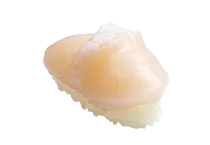
ほたて(北海道・青森県産)
北海道、青森县产扇贝握寿司北海道・青森県産のほたてのにぎり
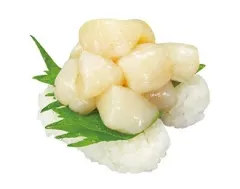
大盛り貝柱
不是虾夷扇贝,而是同属扇贝科的イタヤガイ的小贝柱,大份铺在饭上(中国产)ホタテではなく、同じイタヤガイ科のイタヤガイの小さな貝柱を盛ったにぎり(中国産)
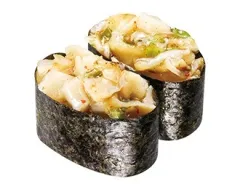
ほたてひもピリ辛わさび
用微辣芥末拌日本产扇贝「裙边」(外套膜)的军舰卷国産ホタテの「ひも」(外套膜)をピリ辛わさびで和えた軍艦
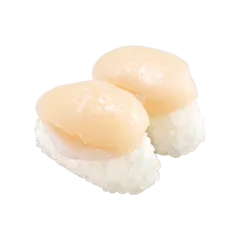
国産ほたて貝柱
日本产扇贝的贝柱(闭壳肌)握寿司国産ほたての貝柱(閉殻筋)のにぎり
展示各店菜单中的叫法与示例。菜品、做法和供应情况可能调整,以门店当日菜单为准。店铺菜品图片来源见完整词典的图片出处。各チェーン店でのメニュー表記例です。季節や店舗により変更となる場合があります。画像出典は菜单词典をご覧ください。