01它是什么,来自哪里?どんな部位?どこから来る?
用日语读一读 · 日本語で読む
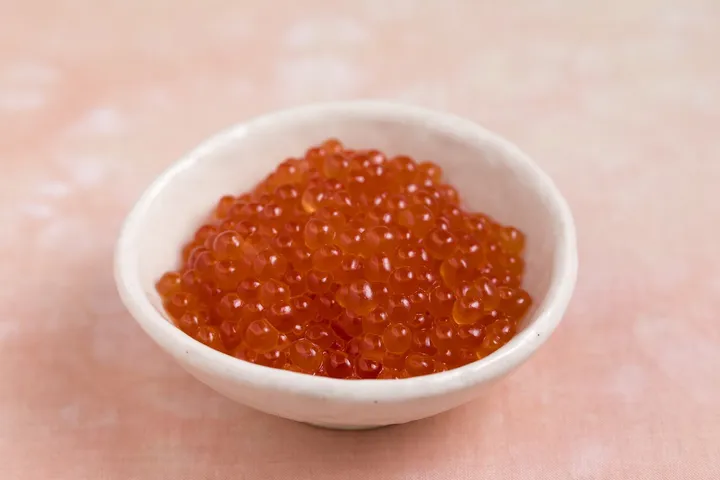
サケ・マスの成熟卵を卵巣膜からばらして塩水などに漬けたもの。膜に包まれたまま塩漬けにしたものは筋子
Ripe salmon or trout eggs separated from the ovary membrane and cured in brine; cured still in the membrane they are sujiko
中国語・英語の解説を見る
把鲑、鳟的成熟卵从卵巢膜中一粒粒分开,用盐水等腌制;连膜整块腌制的叫“筋子”(すじこ)
Ripe salmon or trout eggs separated from the ovary membrane and cured in brine; cured still in the membrane they are sujiko
02名字背后,还有这些故事。名前の由来とストーリー。
名称来自俄语ikra(鱼卵);据说日俄战争(1904—1905年)时俄国人把它当鱼子酱的替代品来吃,这是日本吃イクラ的开端,昭和初期市场上的イクラ还以“カビア”(鱼子酱)之名出售。带膜的筋子自古珍贵,《延喜式》中就有信浓、越后等地以“鮭子”进贡的记载。主要原料是白鲑的卵,进口则来自美国和俄罗斯。另有用海藻多糖包裹植物油制成的仿制品。
ロシア語で「魚卵」を意味する ikra に由来し、日露戦争(1904〜05年)のころ、ロシア人がキャビアの代わりに食べたのが日本での始まりといわれ、昭和初期の市場ではイクラが「カビア」の名で売られていた。膜付きの筋子は古くから珍重され、『延喜式』には「鮭子」として信濃・越後などからの貢納が見える。主な原料はシロサケの卵で、輸入は米国・ロシアから。
海藻由来の多糖類で植物油を包んだ模造品も作られている。
再挑战一下日语原文 · 日本語で読む
ロシア語で「魚卵」を意味する ikra に由来し、日露戦争(1904〜05年)のころ、ロシア人がキャビアの代わりに食べたのが日本での始まりといわれ、昭和初期の市場ではイクラが「カビア」の名で売られていた。膜付きの筋子は古くから珍重され、『延喜式』には「鮭子」として信濃・越後などからの貢納が見える。主な原料はシロサケの卵で、輸入は米国・ロシアから。海藻由来の多糖類で植物油を包んだ模造品も作られている。
The word is Russian ikra, “fish roe”; it is said to have started in Japan around the Russo-Japanese War (1904–05), when Russians ate it as a stand-in for caviar, and in early Shōwa markets ikura was sold under the name kabia (“caviar”). Roe in its membrane (sujiko) has long been prized: the Engishiki records “salmon roe” sent as tribute from Shinano, Echigo and elsewhere. Most ikura comes from chum salmon, with imports from the United States and Russia, and imitations are made by wrapping vegetable oil in a seaweed polysaccharide.
中国語・英語の原文を見る
名称来自俄语ikra(鱼卵);据说日俄战争(1904—1905年)时俄国人把它当鱼子酱的替代品来吃,这是日本吃イクラ的开端,昭和初期市场上的イクラ还以“カビア”(鱼子酱)之名出售。带膜的筋子自古珍贵,《延喜式》中就有信浓、越后等地以“鮭子”进贡的记载。主要原料是白鲑的卵,进口则来自美国和俄罗斯。另有用海藻多糖包裹植物油制成的仿制品。
The word is Russian ikra, “fish roe”; it is said to have started in Japan around the Russo-Japanese War (1904–05), when Russians ate it as a stand-in for caviar, and in early Shōwa markets ikura was sold under the name kabia (“caviar”). Roe in its membrane (sujiko) has long been prized: the Engishiki records “salmon roe” sent as tribute from Shinano, Echigo and elsewhere. Most ikura comes from chum salmon, with imports from the United States and Russia, and imitations are made by wrapping vegetable oil in a seaweed polysaccharide.
03到了店里,它叫什么?お店ではどう呼ばれる?
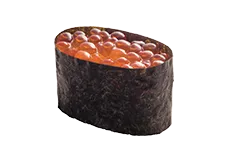
いくら
イクラ(鲑鳟鱼卵)军舰卷(美国、日本、俄罗斯产)いくらの軍艦(アメリカ・日本・ロシア産)
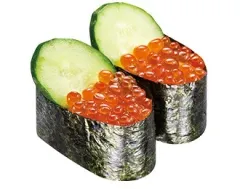
いくら
用鳟鱼卵(俄罗斯产)做的イクラ军舰卷ますの卵(ロシア産)を使ったいくらの軍艦
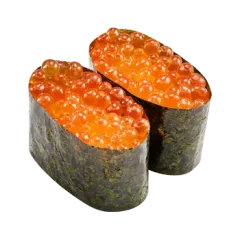
いくら軍艦
イクラ(鲑鳟鱼卵)军舰卷(原料产自美国等)いくらの軍艦(いくらはアメリカ産など)
展示各店菜单中的叫法与示例。菜品、做法和供应情况可能调整,以门店当日菜单为准。店铺菜品图片来源见完整词典的图片出处。各チェーン店でのメニュー表記例です。季節や店舗により変更となる場合があります。画像出典は菜单词典をご覧ください。