01它是什么,来自哪里?どんな部位?どこから来る?
用日语读一读 · 日本語で読む
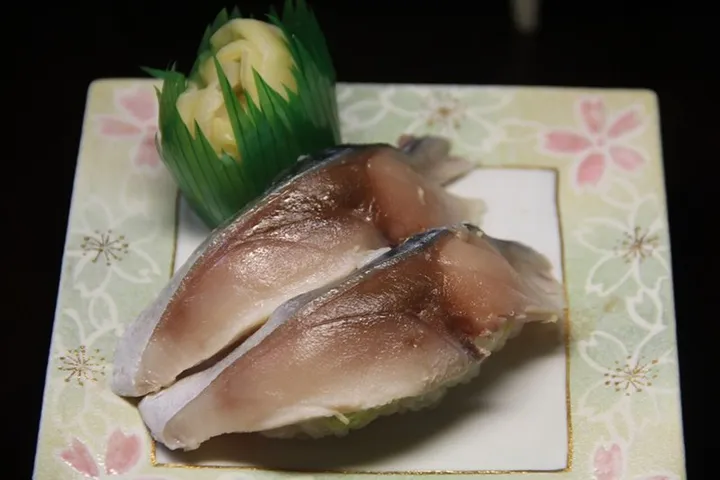
サバ科サバ属のマサバとゴマサバ。すし種では光り物で、塩と酢で締めた「しめさば」にして使う
Chub mackerel (masaba) and spotted mackerel (gomasaba); a hikarimono at sushi, used as shime-saba, cured in salt and vinegar
中国語・英語の解説を見る
鲭科鲭属的日本鲭(マサバ)和澳洲鲭(ゴマサバ);在寿司里属于“光り物”,多做成用盐和醋腌过的“しめさば”
Chub mackerel (masaba) and spotted mackerel (gomasaba); a hikarimono at sushi, used as shime-saba, cured in salt and vinegar
02名字背后,还有这些故事。名前の由来とストーリー。
日本鲭背上有黑色波纹,横截面扁平(别名ヒラサバ);澳洲鲭腹部有细小黑点,截面呈圆形(别名マルサバ)。日本鲭在产卵前的秋冬季脂肪可达20%—30%左右,称“秋サバ”“寒サバ”;澳洲鲭一年中味道变化不大。しめさば的做法是剖成三片后撒盐,再用醋浸泡;它也是京都“棒ずし”和大阪“バッテラ”的材料,后者据说由大阪的“鮓常”在明治中期发明,名字来自葡萄牙语bateira(小船)。
“サバ”一名早在《出云国风土记》(733年)中就写作“佐波”;大分县佐贺关一本钓的日本鲭称为“関さば”。
マサバは背に黒い波状紋があり断面が平たく(別名ヒラサバ)、ゴマサバは腹に細かな黒点があり断面が丸い(別名マルサバ)。マサバは産卵前の秋〜冬に脂肪分が20〜30%前後までのって「秋サバ」「寒サバ」と呼ばれ、ゴマサバは一年を通じて味の変化が小さい。しめさばは三枚におろして塩をし、酢に漬けて作り、京都の棒ずしや、明治中期に大阪の鮓常が考案したとされるバッテラ(ポルトガル語bateira=小舟)の材料にもなる。
名は『出雲国風土記』(733年)に「佐波」として見え、大分県佐賀関で一本釣りされたマサバは「関さば」と呼ばれる。
再挑战一下日语原文 · 日本語で読む
マサバは背に黒い波状紋があり断面が平たく(別名ヒラサバ)、ゴマサバは腹に細かな黒点があり断面が丸い(別名マルサバ)。マサバは産卵前の秋〜冬に脂肪分が20〜30%前後までのって「秋サバ」「寒サバ」と呼ばれ、ゴマサバは一年を通じて味の変化が小さい。しめさばは三枚におろして塩をし、酢に漬けて作り、京都の棒ずしや、明治中期に大阪の鮓常が考案したとされるバッテラ(ポルトガル語bateira=小舟)の材料にもなる。名は『出雲国風土記』(733年)に「佐波」として見え、大分県佐賀関で一本釣りされたマサバは「関さば」と呼ばれる。
Masaba has black wavy bars on its back and a flattish cross-section (hence hirasaba); gomasaba has fine dark spots on the belly and a round section (marusaba). Masaba fattens to around 20–30% fat in autumn and winter before spawning — aki-saba, kan-saba — while gomasaba changes little through the year. Shime-saba is made by filleting, salting and then soaking in vinegar; it also goes into Kyoto’s bō-zushi and Osaka’s battera, said to have been created in the mid-Meiji era by the shop Sushitsune and named from Portuguese bateira, “small boat”. The name appears as 佐波 in the Izumo Fudoki of 733, and masaba line-caught at Saganoseki in Ōita is sold as Seki-saba.
中国語・英語の原文を見る
日本鲭背上有黑色波纹,横截面扁平(别名ヒラサバ);澳洲鲭腹部有细小黑点,截面呈圆形(别名マルサバ)。日本鲭在产卵前的秋冬季脂肪可达20%—30%左右,称“秋サバ”“寒サバ”;澳洲鲭一年中味道变化不大。しめさば的做法是剖成三片后撒盐,再用醋浸泡;它也是京都“棒ずし”和大阪“バッテラ”的材料,后者据说由大阪的“鮓常”在明治中期发明,名字来自葡萄牙语bateira(小船)。“サバ”一名早在《出云国风土记》(733年)中就写作“佐波”;大分县佐贺关一本钓的日本鲭称为“関さば”。
Masaba has black wavy bars on its back and a flattish cross-section (hence hirasaba); gomasaba has fine dark spots on the belly and a round section (marusaba). Masaba fattens to around 20–30% fat in autumn and winter before spawning — aki-saba, kan-saba — while gomasaba changes little through the year. Shime-saba is made by filleting, salting and then soaking in vinegar; it also goes into Kyoto’s bō-zushi and Osaka’s battera, said to have been created in the mid-Meiji era by the shop Sushitsune and named from Portuguese bateira, “small boat”. The name appears as 佐波 in the Izumo Fudoki of 733, and masaba line-caught at Saganoseki in Ōita is sold as Seki-saba.
03到了店里,它叫什么?お店ではどう呼ばれる?
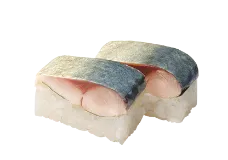
さばの押し寿司
用醋腌鲭鱼做的押寿司(鲭鱼产自中国),配甜醋姜片(ガリ)和紫苏叶;官网中文名「青花鱼押寿司」酢でしめたさばの押し寿司(さばは中国産)。ガリと大葉を使う
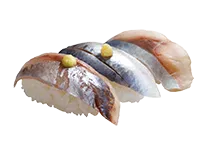
光り物三種盛り
竹荚鱼、沙丁鱼(とろいわし)、醋腌鲭鱼三种「光り物」(亮皮鱼)拼成一盘;仅北海道门店供应あじ・とろいわし・しめさばの光り物3種を1皿に盛ったもの。北海道の店舗限定
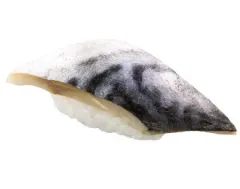
大切りとろ〆さば(一貫)
用盐和醋腌制的多脂鲭鱼(〆鲭)大块切片,1贯(挪威产等)脂ののったさばを塩と酢で〆た〆さばの大切り1貫(ノルウェー産など)
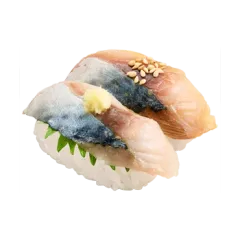
天然さば食べ比べ
一盘同时品尝野生鲭鱼的原味与「漬け」(酱汁腌渍)两种(期间限定)天然さばの「さば」と「漬け」を1皿で食べ比べる(期間限定)
展示各店菜单中的叫法与示例。菜品、做法和供应情况可能调整,以门店当日菜单为准。店铺菜品图片来源见完整词典的图片出处。各チェーン店でのメニュー表記例です。季節や店舗により変更となる場合があります。画像出典は菜单词典をご覧ください。