01它是什么,来自哪里?どんな部位?どこから来る?
用日语读一读 · 日本語で読む
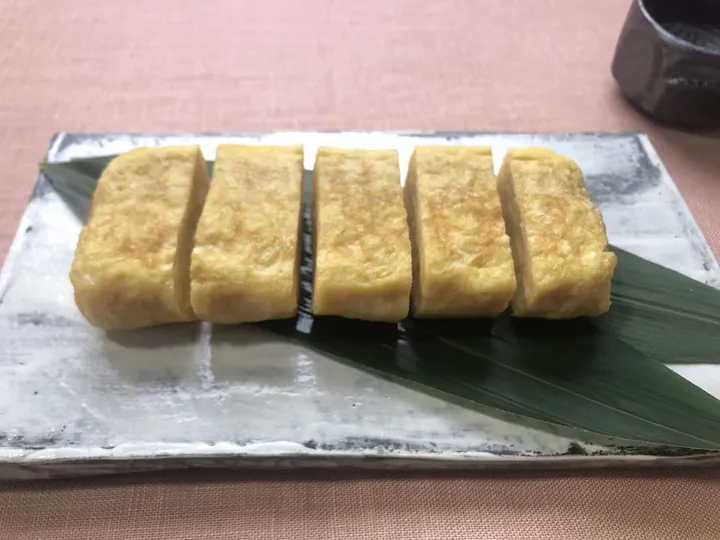
溶き卵に調味料を加えて厚く焼いた卵焼き。すし屋では「ギョク」と呼ぶ
Beaten egg seasoned and cooked into a thick omelette; sushi shops call it gyoku
中国語・英語の解説を見る
在蛋液里加调味料煎成的厚蛋烧;寿司店里叫“ギョク”
Beaten egg seasoned and cooked into a thick omelette; sushi shops call it gyoku
02名字背后,还有这些故事。名前の由来とストーリー。
握寿司约在文化、文政年间(1804—1830年)诞生于江户,据说起初不用鲜鱼贝,主要的料是玉子烧和“おぼろ”(鱼松)。当时的寿司每贯约4—8文,据说江户末期最贵的是16文的“卵巻き”(蛋卷寿司)。“ギョク”是把“玉子”的“玉”字按音读念的行话;“玉子”的写法一说因其形圆,一说因为被看作装有“魂(たま)”之物;“厚焼の玉子”一词见于1769年的洒落本。
握りずしは文化・文政期(1804〜30年)ごろに江戸で始まり、初めは鮮魚介類を使わず卵焼きと「おぼろ(でんぶ)」が主な種だったとされる。当時のすしは1貫4〜8文ほどで、江戸末期に最も高かったのは16文の「卵巻き」だったという。「ギョク」は「玉子」の「玉」を音読みした符丁で、「玉子」の字は形の丸さから、あるいは魂(たま)の入ったものと考えたためと解され、「厚焼の玉子」の語は1769年の洒落本に見える。
再挑战一下日语原文 · 日本語で読む
握りずしは文化・文政期(1804〜30年)ごろに江戸で始まり、初めは鮮魚介類を使わず卵焼きと「おぼろ(でんぶ)」が主な種だったとされる。当時のすしは1貫4〜8文ほどで、江戸末期に最も高かったのは16文の「卵巻き」だったという。「ギョク」は「玉子」の「玉」を音読みした符丁で、「玉子」の字は形の丸さから、あるいは魂(たま)の入ったものと考えたためと解され、「厚焼の玉子」の語は1769年の洒落本に見える。
Nigiri began in Edo around the Bunka–Bunsei era (1804–30), and at first, it is said, its main toppings were not fresh seafood but omelette and oboro, sweet fish floss. Sushi then cost about 4–8 mon a piece, and the dearest at the end of the Edo period, at 16 mon, is said to have been the egg roll (tamago-maki). Gyoku is trade slang reading the 玉 of 玉子 in its Chinese reading; the spelling 玉子 is explained by the egg’s round shape or as a vessel holding a soul (tama), and “thick-cooked egg” (atsuyaki no tamago) appears in a sharebon of 1769.
中国語・英語の原文を見る
握寿司约在文化、文政年间(1804—1830年)诞生于江户,据说起初不用鲜鱼贝,主要的料是玉子烧和“おぼろ”(鱼松)。当时的寿司每贯约4—8文,据说江户末期最贵的是16文的“卵巻き”(蛋卷寿司)。“ギョク”是把“玉子”的“玉”字按音读念的行话;“玉子”的写法一说因其形圆,一说因为被看作装有“魂(たま)”之物;“厚焼の玉子”一词见于1769年的洒落本。
Nigiri began in Edo around the Bunka–Bunsei era (1804–30), and at first, it is said, its main toppings were not fresh seafood but omelette and oboro, sweet fish floss. Sushi then cost about 4–8 mon a piece, and the dearest at the end of the Edo period, at 16 mon, is said to have been the egg roll (tamago-maki). Gyoku is trade slang reading the 玉 of 玉子 in its Chinese reading; the spelling 玉子 is explained by the egg’s round shape or as a vessel holding a soul (tama), and “thick-cooked egg” (atsuyaki no tamago) appears in a sharebon of 1769.
03到了店里,它叫什么?お店ではどう呼ばれる?
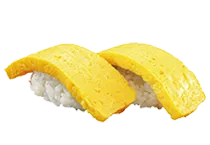
旨だしたまご
加高汤的日式煎蛋握寿司(鸡蛋产自日本、泰国);官网中文名「玉子烧 手握寿司」だし入りの玉子焼きのにぎり(鶏卵は日本・タイ産)
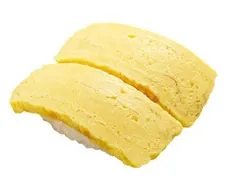
たまご焼き
日式煎蛋握寿司(鸡蛋为日本产等)玉子焼きのにぎり(鶏卵は国産など)
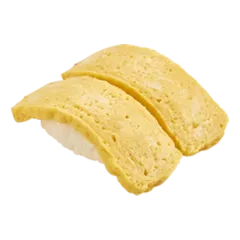
たまご
日式煎蛋握寿司(鸡蛋为日本产等);官网中文名「鸡蛋」玉子焼きのにぎり(鶏卵は日本産など)
展示各店菜单中的叫法与示例。菜品、做法和供应情况可能调整,以门店当日菜单为准。店铺菜品图片来源见完整词典的图片出处。各チェーン店でのメニュー表記例です。季節や店舗により変更となる場合があります。画像出典は菜单词典をご覧ください。