01它是什么,来自哪里?どんな部位?どこから来る?
用日语读一读 · 日本語で読む
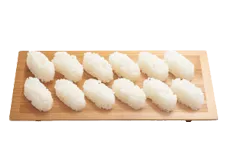
小皿に盛ったすしが客の前を回るベルトに乗って流れ、客が好きな皿を取る方式の店
A sushi restaurant where small plates ride a belt past the counter and diners take what they like
中国語・英語の解説を見る
小碟寿司放在顾客面前循环的传送带上,任客人自取的寿司店
A sushi restaurant where small plates ride a belt past the counter and diners take what they like
02名字背后,还有这些故事。名前の由来とストーリー。
在大阪布施市(今东大阪市)以每盘4个20日元卖站着吃的寿司的白石义明,从吹田市一家啤酒厂的传送带得到灵感,与当地小工厂老板们花了约10年开发出“传送带回旋式餐台”,1958年4月在近铁布施站附近开出“廻る元禄寿司”1号店(1962年取得专利,1978年失效)。1970年大阪世博会出店后一举成名,1991年“回转寿司”首次收入《广辞苑》(第4版)。
如今日本国内门店超过4000家,2022年市场规模达7252亿日元(富士经济调查)。按盘子的颜色或花纹分价,吃完按盘子数量结账。
大阪・布施市(現東大阪市)で立ち食いずしを1皿4貫20円で出していた白石義明が、吹田市のビール工場で見たベルトコンベアから着想し、町工場の経営者らと約10年かけて「コンベア旋回式食事台」を開発、1958年4月に近鉄布施駅近くで「廻る元禄寿司」1号店を開いた(特許は1962年取得、1978年失効)。1970年の大阪万博への出店で一躍知られ、1991年には広辞苑(第4版)に「回転寿司」が初めて載った。
国内の店舗は4,000店を超え、市場規模は2022年に7,252億円(富士経済調べ)。皿の色や柄で値段を分け、食べ終えた皿の枚数で会計する。
再挑战一下日语原文 · 日本語で読む
大阪・布施市(現東大阪市)で立ち食いずしを1皿4貫20円で出していた白石義明が、吹田市のビール工場で見たベルトコンベアから着想し、町工場の経営者らと約10年かけて「コンベア旋回式食事台」を開発、1958年4月に近鉄布施駅近くで「廻る元禄寿司」1号店を開いた(特許は1962年取得、1978年失効)。1970年の大阪万博への出店で一躍知られ、1991年には広辞苑(第4版)に「回転寿司」が初めて載った。国内の店舗は4,000店を超え、市場規模は2022年に7,252億円(富士経済調べ)。皿の色や柄で値段を分け、食べ終えた皿の枚数で会計する。
Shiraishi Yoshiaki, who sold stand-up sushi at four pieces for ¥20 in Fuse (now Higashi-Ōsaka), took the idea from a conveyor belt at a beer plant in Suita and spent about ten years with local machine shops developing a “conveyor rotating dining counter”; the first Mawaru Genroku Sushi opened near Kintetsu Fuse Station in April 1958 (patented 1962, expired 1978). A stand at the 1970 Osaka Expo made it famous, and the Kōjien dictionary first listed 回転寿司 in its 4th edition (1991). Japan now has more than 4,000 such restaurants, and the market reached ¥725.2 billion in 2022 (Fuji Keizai). Prices are coded by plate colour or pattern, and the bill is counted from the empty plates.
中国語・英語の原文を見る
在大阪布施市(今东大阪市)以每盘4个20日元卖站着吃的寿司的白石义明,从吹田市一家啤酒厂的传送带得到灵感,与当地小工厂老板们花了约10年开发出“传送带回旋式餐台”,1958年4月在近铁布施站附近开出“廻る元禄寿司”1号店(1962年取得专利,1978年失效)。1970年大阪世博会出店后一举成名,1991年“回转寿司”首次收入《广辞苑》(第4版)。如今日本国内门店超过4000家,2022年市场规模达7252亿日元(富士经济调查)。按盘子的颜色或花纹分价,吃完按盘子数量结账。
Shiraishi Yoshiaki, who sold stand-up sushi at four pieces for ¥20 in Fuse (now Higashi-Ōsaka), took the idea from a conveyor belt at a beer plant in Suita and spent about ten years with local machine shops developing a “conveyor rotating dining counter”; the first Mawaru Genroku Sushi opened near Kintetsu Fuse Station in April 1958 (patented 1962, expired 1978). A stand at the 1970 Osaka Expo made it famous, and the Kōjien dictionary first listed 回転寿司 in its 4th edition (1991). Japan now has more than 4,000 such restaurants, and the market reached ¥725.2 billion in 2022 (Fuji Keizai). Prices are coded by plate colour or pattern, and the bill is counted from the empty plates.