01它是什么,来自哪里?どんな部位?どこから来る?
用日语读一读 · 日本語で読む
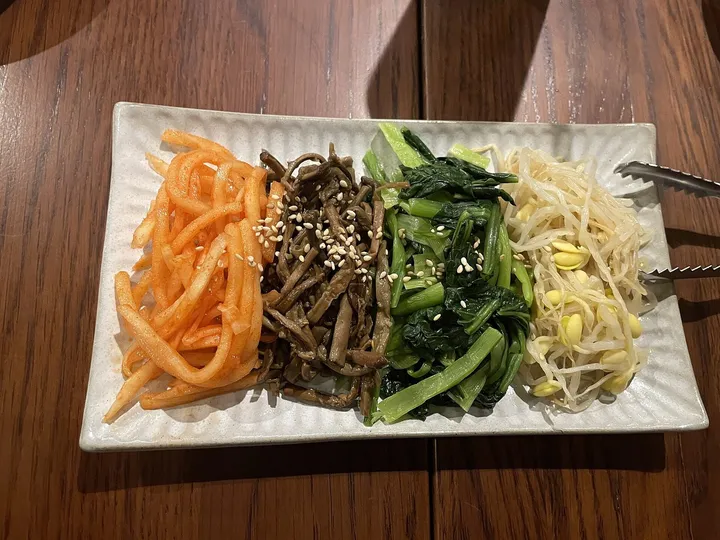
もやし・ほうれん草・ぜんまいなどをゆでるなどして、ごま油・醤油・にんにくなどで和えたもの
Bean sprouts, spinach, bracken and the like, blanched and dressed with sesame oil, soy sauce and garlic
中国語・英語の解説を見る
豆芽、菠菜、蕨菜等焯水后,用香油、酱油、蒜等拌成
Bean sprouts, spinach, bracken and the like, blanched and dressed with sesame oil, soy sauce and garlic
02名字背后,还有这些故事。名前の由来とストーリー。
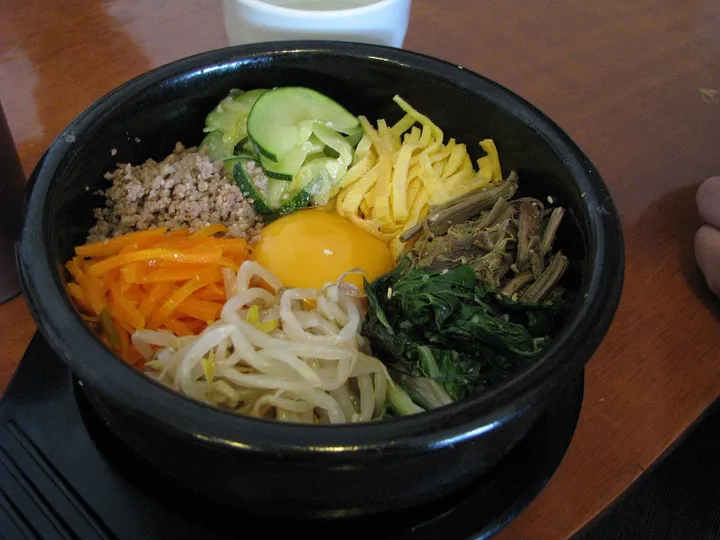
韩语 나물 既指可食用的野菜、树叶本身,也指把它们焯、炒或生着调味拌成的菜。分生拌的「生菜」(センチェ)和焯水后再拌的「熟菜」(スクチェ)。常见菠菜、黄豆芽、蕨菜三样拼在一起,也是拌饭的配料。韩国《标准国语大辞典》的例句说:“正月十五(大满月)吃五谷饭和九种拌菜。”
朝鮮語 나물 は、食べられる草や葉そのものと、それをゆでる・炒める・生のまま味付けして和えた料理の両方を指す。生野菜を和えた「生菜(センチェ)」と、湯通ししてから和えた「熟菜(スクチェ)」がある。ほうれん草・大豆もやし・ぜんまいの3種を盛り合わせることが多く、ビビンバの具にもなる。韓国の標準国語大辞典の用例には「正月の大満月(旧暦1月15日)には五穀飯と9種類のナムルを食べる」とある。
再挑战一下日语原文 · 日本語で読む
朝鮮語 나물 は、食べられる草や葉そのものと、それをゆでる・炒める・生のまま味付けして和えた料理の両方を指す。生野菜を和えた「生菜(センチェ)」と、湯通ししてから和えた「熟菜(スクチェ)」がある。ほうれん草・大豆もやし・ぜんまいの3種を盛り合わせることが多く、ビビンバの具にもなる。韓国の標準国語大辞典の用例には「正月の大満月(旧暦1月15日)には五穀飯と9種類のナムルを食べる」とある。
Korean namul means both edible greens themselves and the dish made by boiling, stir-frying or simply seasoning them. There are saengchae, dressed raw, and sukchae, blanched first. A trio of spinach, soybean sprouts and bracken is the usual assortment, and namul also tops bibimbap. An example sentence in the Standard Korean Language Dictionary reads: “On the first full moon of the lunar year we eat five-grain rice and nine kinds of namul.”
中国語・英語の原文を見る
韩语 나물 既指可食用的野菜、树叶本身,也指把它们焯、炒或生着调味拌成的菜。分生拌的「生菜」(センチェ)和焯水后再拌的「熟菜」(スクチェ)。常见菠菜、黄豆芽、蕨菜三样拼在一起,也是拌饭的配料。韩国《标准国语大辞典》的例句说:“正月十五(大满月)吃五谷饭和九种拌菜。”
Korean namul means both edible greens themselves and the dish made by boiling, stir-frying or simply seasoning them. There are saengchae, dressed raw, and sukchae, blanched first. A trio of spinach, soybean sprouts and bracken is the usual assortment, and namul also tops bibimbap. An example sentence in the Standard Korean Language Dictionary reads: “On the first full moon of the lunar year we eat five-grain rice and nine kinds of namul.”
03到了店里,它叫什么?お店ではどう呼ばれる?
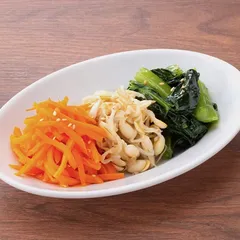
展示各店菜单中的叫法与示例。菜品、做法和供应情况可能调整,以门店当日菜单为准。店铺菜品图片来源见完整词典的图片出处。各チェーン店でのメニュー表記例です。季節や店舗により変更となる場合があります。画像出典は菜单词典をご覧ください。