01它是什么,来自哪里?どんな部位?どこから来る?
用日语读一读 · 日本語で読む
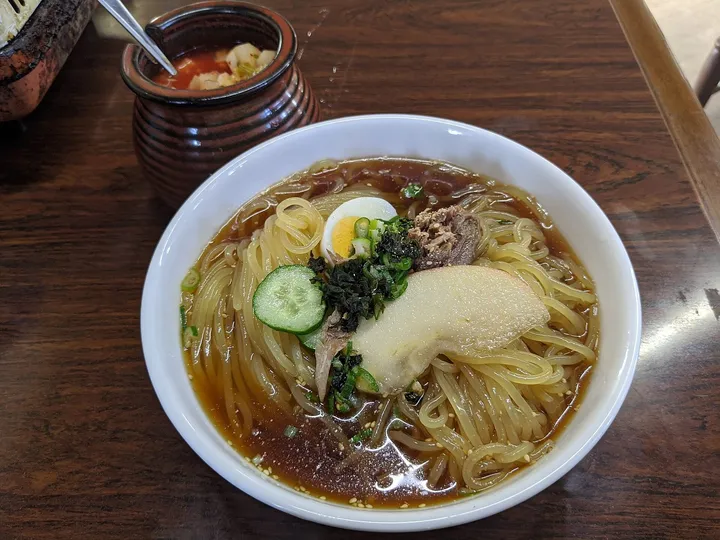
朝鮮半島の冷麺に由来する、コシの強い麺を冷たいスープで食べる料理
Korean-style chewy noodles served in a chilled broth
中国語・英語の解説を見る
源自朝鲜半岛冷面,筋道的面条配冰凉的汤
Korean-style chewy noodles served in a chilled broth
02名字背后,还有这些故事。名前の由来とストーリー。
朝鲜半岛的冷面是把荞麦粉加淀粉的面团从模具中压出、再煮熟的面,原本是十二月在暖炕(温突)屋里吃来感受凉意的冬季时令食物(平壤水冷面、咸兴拌冷面最有名)。盛冈冷面据说发源于1954年开业的盛冈烤肉店「食道園」,面条不用荞麦粉,而用小麦粉和马铃薯淀粉制成,与碗子荞麦面、炸酱面并称“盛冈三大面”。食道園的辣度分特辣、辣、普通、辣料另上(「別辛」)四档。
另外在关西,「冷麺」有时指中式凉面(冷やし中華)。
朝鮮半島の冷麺はそば粉とでんぷんの生地を型から押し出してゆでる麺で、もとは12月の時食としてオンドルの部屋で涼を味わう冬の料理だった(平壌の水冷麺、咸興のビビン冷麺が有名)。盛岡冷麺は1954年創業の盛岡の焼肉店「食道園」が発祥とされ、そば粉を使わず小麦粉と馬鈴薯でんぷんで麺を作り、わんこそば・じゃじゃ麺と並ぶ盛岡三大麺に数えられる。
食道園では辛さを特辛・辛口・普通・別辛の4段階から選ぶ。なお関西では「冷麺」が冷やし中華を指すことがある。
再挑战一下日语原文 · 日本語で読む
朝鮮半島の冷麺はそば粉とでんぷんの生地を型から押し出してゆでる麺で、もとは12月の時食としてオンドルの部屋で涼を味わう冬の料理だった(平壌の水冷麺、咸興のビビン冷麺が有名)。盛岡冷麺は1954年創業の盛岡の焼肉店「食道園」が発祥とされ、そば粉を使わず小麦粉と馬鈴薯でんぷんで麺を作り、わんこそば・じゃじゃ麺と並ぶ盛岡三大麺に数えられる。食道園では辛さを特辛・辛口・普通・別辛の4段階から選ぶ。なお関西では「冷麺」が冷やし中華を指すことがある。
Korean naengmyeon uses noodles pressed from a buckwheat-and-starch dough through a mould and boiled; it began as a December seasonal dish, eaten for its chill in ondol-heated rooms (Pyongyang’s brothy and Hamhung’s spicy mixed versions are the classics). Morioka reimen traces to Shokudōen, a yakiniku restaurant founded in Morioka in 1954; its noodles use wheat flour and potato starch instead of buckwheat, and it counts among Morioka’s “three great noodles” with wanko soba and jajamen. Shokudōen lets you choose the heat: extra hot, hot, regular, or betsukara (spice served on the side). In Kansai, reimen can also mean hiyashi chūka, Chinese-style chilled ramen.
中国語・英語の原文を見る
朝鲜半岛的冷面是把荞麦粉加淀粉的面团从模具中压出、再煮熟的面,原本是十二月在暖炕(温突)屋里吃来感受凉意的冬季时令食物(平壤水冷面、咸兴拌冷面最有名)。盛冈冷面据说发源于1954年开业的盛冈烤肉店「食道園」,面条不用荞麦粉,而用小麦粉和马铃薯淀粉制成,与碗子荞麦面、炸酱面并称“盛冈三大面”。食道園的辣度分特辣、辣、普通、辣料另上(「別辛」)四档。另外在关西,「冷麺」有时指中式凉面(冷やし中華)。
Korean naengmyeon uses noodles pressed from a buckwheat-and-starch dough through a mould and boiled; it began as a December seasonal dish, eaten for its chill in ondol-heated rooms (Pyongyang’s brothy and Hamhung’s spicy mixed versions are the classics). Morioka reimen traces to Shokudōen, a yakiniku restaurant founded in Morioka in 1954; its noodles use wheat flour and potato starch instead of buckwheat, and it counts among Morioka’s “three great noodles” with wanko soba and jajamen. Shokudōen lets you choose the heat: extra hot, hot, regular, or betsukara (spice served on the side). In Kansai, reimen can also mean hiyashi chūka, Chinese-style chilled ramen.
03到了店里,它叫什么?お店ではどう呼ばれる?
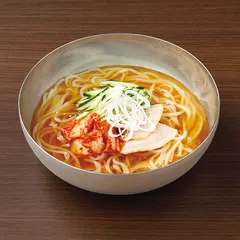
牛角冷麺
冠以店名的冷面,有半份店名を冠した冷麺。ハーフもある
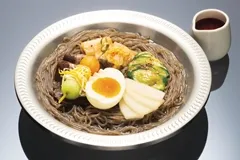
銀盤冷麺
冷面,面条可选荞麦面或小麦面,有小份冷麺。麺はそば粉麺か小麦粉麺を選ぶ。小盛もある
ひとくち冷麺
小份冷面(「ひとくち」意为一口)少量の冷麺(「ひとくち」は一口の意)
展示各店菜单中的叫法与示例。菜品、做法和供应情况可能调整,以门店当日菜单为准。店铺菜品图片来源见完整词典的图片出处。各チェーン店でのメニュー表記例です。季節や店舗により変更となる場合があります。画像出典は菜单词典をご覧ください。