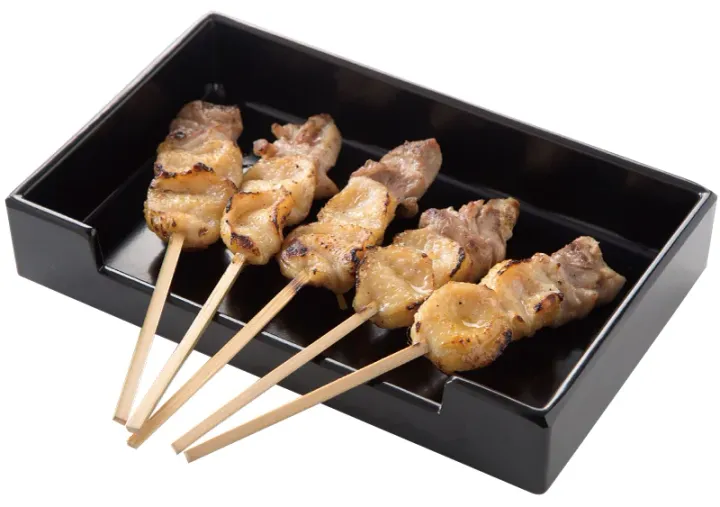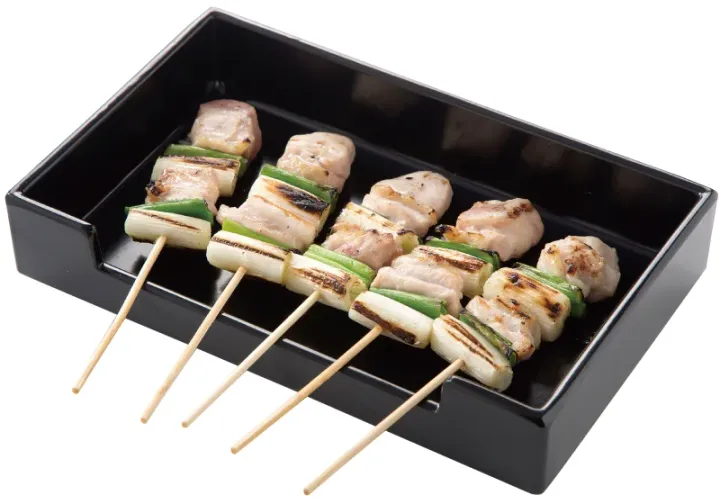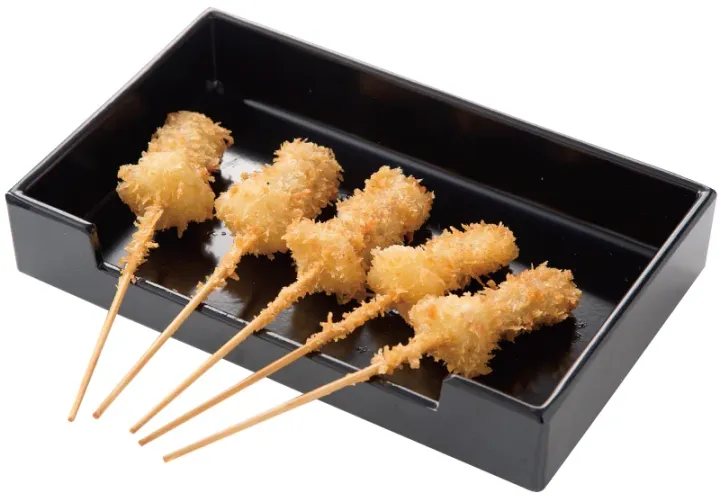
01它是什么,来自哪里?どんな部位?どこから来る?
用日语读一读 · 日本語で読む
食材を刺し通して焼いたり干したりする、先のとがった竹や鉄の細い棒。串に刺して焼く料理は「串焼き」
A pointed bamboo or metal stick for threading food to grill or dry; food grilled on one is kushiyaki
中国語・英語の解説を見る
用来穿起食材烤制或晾干的尖头竹签或铁签;串起来烤的菜叫“串焼き”(烤串)
A pointed bamboo or metal stick for threading food to grill or dry; food grilled on one is kushiyaki
02名字背后,还有这些故事。名前の由来とストーリー。
据说与“櫛”(梳子)同源;汉字“串”是把东西穿在一起的象形字。古称“焼串”(やいぐし),几乎都是竹制,室町时代的《四条流庖丁书》(1489年)规定大烤签长1尺2寸(约36厘米)、小烤签长1尺(约30厘米)。穿串叫“串を打つ”(串打ち),行内有“穿串三年,烤一辈子”(串打ち三年、焼き一生)的说法。京桥伊势广每天早上把送来的整鸡分割,再按部位穿串。
「櫛(くし)」と同語源とされ、漢字「串」は物を串刺しにした形の象形文字。古くは「焼串(やいぐし)」と呼ばれて竹製がほとんどで、室町時代の『四条流庖丁書』(1489年)は大焼串を長さ1尺2寸(約36cm)、小焼串を1尺(約30cm)と定めている。串に刺すことを「串を打つ」「串打ち」といい、職人の世界では「串打ち三年、焼き一生」と言われる。
京橋の伊勢廣は毎朝届く丸鶏を捌き、部位ごとに串を打つ。
再挑战一下日语原文 · 日本語で読む
「櫛(くし)」と同語源とされ、漢字「串」は物を串刺しにした形の象形文字。古くは「焼串(やいぐし)」と呼ばれて竹製がほとんどで、室町時代の『四条流庖丁書』(1489年)は大焼串を長さ1尺2寸(約36cm)、小焼串を1尺(約30cm)と定めている。串に刺すことを「串を打つ」「串打ち」といい、職人の世界では「串打ち三年、焼き一生」と言われる。京橋の伊勢廣は毎朝届く丸鶏を捌き、部位ごとに串を打つ。
The word is thought to share its origin with kushi “comb”, and the kanji 串 is a pictograph of things threaded on a stick. Anciently called yaigushi (“grilling skewer”) and almost always bamboo, skewers were given set sizes in the Muromachi-period cookery text Shijō-ryū Hōchōgaki (1489): 1 shaku 2 sun (about 36 cm) for a large one, 1 shaku (about 30 cm) for a small one. Threading is kushi-uchi, and the trade saying goes “three years to skewer, a lifetime to grill” (kushi-uchi sannen, yaki isshō). Ise-hiro in Kyōbashi butchers whole birds delivered every morning and skewers them part by part.
中国語・英語の原文を見る
据说与“櫛”(梳子)同源;汉字“串”是把东西穿在一起的象形字。古称“焼串”(やいぐし),几乎都是竹制,室町时代的《四条流庖丁书》(1489年)规定大烤签长1尺2寸(约36厘米)、小烤签长1尺(约30厘米)。穿串叫“串を打つ”(串打ち),行内有“穿串三年,烤一辈子”(串打ち三年、焼き一生)的说法。京桥伊势广每天早上把送来的整鸡分割,再按部位穿串。
The word is thought to share its origin with kushi “comb”, and the kanji 串 is a pictograph of things threaded on a stick. Anciently called yaigushi (“grilling skewer”) and almost always bamboo, skewers were given set sizes in the Muromachi-period cookery text Shijō-ryū Hōchōgaki (1489): 1 shaku 2 sun (about 36 cm) for a large one, 1 shaku (about 30 cm) for a small one. Threading is kushi-uchi, and the trade saying goes “three years to skewer, a lifetime to grill” (kushi-uchi sannen, yaki isshō). Ise-hiro in Kyōbashi butchers whole birds delivered every morning and skewers them part by part.
03到了店里,它叫什么?お店ではどう呼ばれる?
串カツ
牛肉和洋葱穿串、裹面包糠油炸,蘸专用的炸串酱汁牛肉と玉ねぎを串に刺し、パン粉を付けて揚げたもの。専用のカツタレを付ける
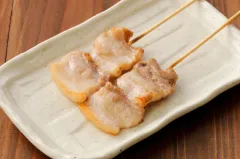
豚バラ串焼
猪五花(瘦肥相间的「三枚肉」)烤串赤身と脂が層になった豚バラ(三枚肉)の串焼き
展示各店菜单中的叫法与示例。菜品、做法和供应情况可能调整,以门店当日菜单为准。店铺菜品图片来源见完整词典的图片出处。各チェーン店でのメニュー表記例です。季節や店舗により変更となる場合があります。画像出典は菜单词典をご覧ください。